
our Blog
Everything You Need to Know About Copper Gutter Installation in DFW
Everything You Need to Know About Copper Gutter Installation in DFW
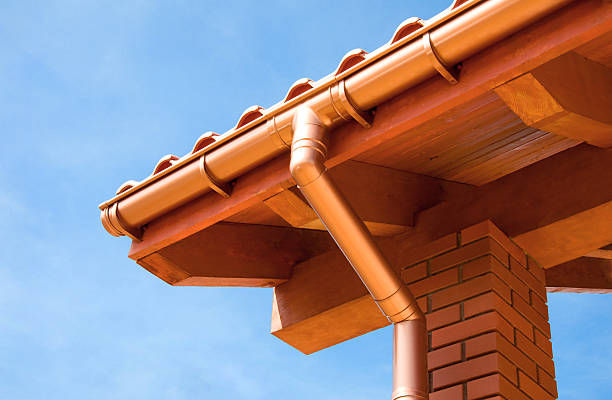
Copper gutters occupy a specific position in the DFW gutter market — the premium option that a meaningful segment of homeowners ask about, a smaller segment ultimately chooses, and almost everyone who does choose finds completely worth the investment. They're distinctive, genuinely long-lasting, visually impressive in a way that evolves uniquely over time, and appropriate for a specific set of homes and homeowners in the North Texas luxury residential market.
They're also genuinely different from aluminum and require specific installation knowledge, material handling experience, and design consideration that not every DFW gutter company can deliver competently. For homeowners throughout Southlake, Westlake, Colleyville, Trophy Club, Flower Mound, Frisco's premium neighborhoods, Richardson's highest-value properties, and every DFW community where luxury and custom construction represents a significant portion of the housing stock, this guide covers everything you need to know about copper gutter installation — from costs to patina to compatibility to which homes copper is actually the right choice for.
Why Copper Gutters Are Different From Everything Else
Copper is the only gutter material that improves in visual character over time. Every other gutter material — aluminum, galvalume, vinyl, steel — degrades visually from installation day forward. Paint fades, coatings dull, material develops wear patterns. Copper does the opposite: it starts bright and warm on installation day, transitions through a rich amber-brown patina within the first few years, and in climates with appropriate moisture and atmospheric conditions can eventually develop the distinctive blue-green verdigris that makes copper roofing and gutters on historic buildings one of the most visually compelling architectural features available.
In DFW's climate — with North Texas's combination of humidity during spring, dry heat in summer, and moderate winter moisture — copper develops its patina on a predictable timeline. The bright copper of day one transitions to brown-copper tones within one to three years, with the patina developing progressively over years and decades toward the fully oxidized state. The result is a gutter system that looks genuinely distinguished on the day of installation and becomes more visually interesting over time rather than less.
Beyond aesthetics, copper has material properties that make it particularly well-suited to demanding environments:
Corrosion resistance without a coating. Aluminum gutters resist corrosion because of their baked-enamel paint coating — when that coating is scratched, the underlying aluminum is exposed. Copper doesn't need a protective coating; the patina that develops on the surface is itself a protective layer that shields the underlying metal. A hailstone that dents copper but doesn't penetrate it hasn't compromised the corrosion protection — the patina continues developing on the dented surface.
Natural antimicrobial properties. Copper inhibits the growth of algae, mold, and lichen that accumulates on and around other gutter materials in DFW's humid spring conditions. Copper gutters stay cleaner between service visits and don't develop the biological staining that affects painted aluminum systems over time.
Extraordinary service life. Copper gutters installed correctly can last 50 to 100 years — a service life that exceeds the typical ownership period of any home they're installed on. For homeowners making significant investments in permanent-quality construction, copper gutters represent a once-in-the-building's-lifetime investment. The homes in Southlake's Timarron with copper gutters installed today may still be serving the property in 2075.
What Copper Gutters Cost in DFW in 2026
Copper gutter installation in the DFW area costs between $25 and $45 per linear foot installed in 2026 — a range that reflects the copper material cost (which fluctuates with commodity markets), the specialized installation expertise required, and the specific profile and configuration selected.
For a standard DFW home with 150 to 200 linear feet of guttering, copper installation typically runs $4,500 to $9,000 — compared to $1,200 to $3,000 for standard seamless aluminum. For larger custom homes with complex rooflines and more linear footage, the total investment is proportionally higher.
How to think about the cost:
The comparison that matters isn't copper versus aluminum in upfront cost — it's copper over its service life versus aluminum over its service life.
A standard seamless aluminum system at $2,000 lasts 20 to 30 years in DFW conditions, meaning it needs replacement two to three times over the 50-year period that a copper system serves. Total aluminum cost over 50 years: $4,000 to $6,000 (not accounting for inflation and rising installation costs). Total copper cost: $5,000 to $9,000 once.
On that timeline, copper is not dramatically more expensive than aluminum — and it delivers the visual character enhancement, the natural antimicrobial performance, and the zero-replacement-cycle experience that aluminum cannot provide regardless of how many times it's replaced.
K-Style vs. Half-Round Copper: Which Profile for Your DFW Home
Copper is available in both K-style and half-round profiles — and the right choice depends on the architectural style of the home:
Copper K-style gutters are the more common residential choice in DFW — the same angular profile used in standard aluminum systems, fabricated in copper. K-style provides the highest water capacity for a given nominal gutter size and suits most contemporary and transitional architectural styles. For DFW custom homes that are premium but architecturally contemporary — clean lines, modern details, transitional style — copper K-style provides the premium material character without the traditional profile that might create visual tension with modern design elements.
Copper half-round gutters are the historically appropriate choice for DFW homes in traditional architectural styles — colonial, craftsman, Tudor, French country, Mediterranean, and similar period-influenced designs. The semicircular profile was the dominant residential gutter form before K-style became standard, and it remains the architecturally correct choice for homes where visual authenticity to a historical design tradition is part of the property's character.
Half-round gutters also have a functional advantage in their smooth interior profile — no sharp corners where debris accumulates and where corrosion typically begins. Water flows smoothly through the rounded interior without the standing-moisture corner conditions that affect K-style systems over time.
Quinn Gutters fabricates both profiles in copper on-site at the property — producing the same custom-fit seamless system that defines every Quinn Gutters installation, regardless of material.
Copper Compatibility With Adjacent Materials
Copper is a reactive metal — understanding its compatibility with adjacent materials on the roofline prevents the galvanic corrosion that can develop when dissimilar metals are in direct or water-mediated contact:
Copper and aluminum downspouts: While mixing copper gutters with aluminum downspouts is sometimes done for cost reduction (aluminum downspouts cost significantly less than copper), the combination creates galvanic potential where runoff from the copper contacts the aluminum. Over time, this can accelerate corrosion of the aluminum downspout at the junction. Quinn Gutters recommends copper downspouts with copper gutters for maximum system longevity.
Copper and steel roofing: Water that has run over copper surfaces carries copper ions in solution. If this copper-bearing runoff then contacts steel roofing material, it can accelerate corrosion of the steel at contact points. For DFW homes combining copper gutters with metal roofing, the roofing material specification and its relationship to the copper drainage path should be reviewed.
Copper and most masonry: Generally compatible — copper runoff creates the staining on masonry surfaces that is the most visible side effect of copper gutters, requiring occasional cleaning of masonry surfaces below downspout discharge points.
HOA Considerations for Copper Gutters in DFW
Some DFW HOA communities have restrictions that affect copper gutter selection:
Color uniformity requirements: Many DFW HOAs require gutters to match the fascia or trim color of the home. Copper's evolving patina means it doesn't maintain a fixed color — it transitions through copper, brown, and eventually toward blue-green. HOA communities with strict exterior color standards may require HOA approval before copper installation.
Premium community approvals: Many of DFW's most prestigious communities — Southlake's premier neighborhoods, Westlake, upscale Colleyville corridors — have architectural review processes that accommodate or encourage premium materials like copper. Quinn Gutters navigates HOA consultation for copper installations as a standard part of the Southlake, Colleyville, and Westlake project process.
Which DFW Properties Are Right for Copper
The honest answer to "should I get copper gutters?" for a DFW homeowner comes down to a few questions:
Is the home a long-term investment? Copper's value is realized over decades. Homeowners planning to sell within five years don't recover the premium in the sale price sufficiently to make the economic case for copper over aluminum. Homeowners building or buying a forever home — or investing in a property intended to stay in the family long-term — get the full benefit of copper's extraordinary service life.
Does the architectural style support copper? Traditional, period-influenced, and luxury contemporary architectural styles all support copper aesthetically. Standard production homes in suburban neighborhoods where copper would be visually incongruous with the surrounding context may not be the best applications.
Is the construction quality otherwise premium? Copper gutters on a standard builder-grade home with vinyl siding create a material quality mismatch that doesn't serve either component well. Copper is most appropriate as part of a premium material package — stone or brick cladding, architectural grade roofing, quality windows and trim — where the overall exterior communicates the same level of investment.
Quinn Gutters discusses these considerations honestly with every DFW homeowner asking about copper — because the goal is the right recommendation, not the highest-revenue recommendation.
Quinn Gutters: Copper Gutter Installation Across DFW's Luxury Markets
Quinn Gutters installs copper gutter systems throughout Southlake, Westlake, Colleyville, Trophy Club, Flower Mound, Frisco, and every DFW community where premium residential construction and the homeowners who invest in it deserve a gutter system at the same quality level.
Every copper installation is fabricated on-site — the roll-forming machine at your property, every run cut to your exact roofline dimensions, every corner mitered precisely to your specific geometry. The same professional installation standards that define every Quinn Gutters project, executed in the material that turns a maintenance necessity into a 50-year architectural element.

Find Out If Copper Is Right for Your DFW Home
Request your free copper gutter consultation from Quinn Gutters today and let our team walk you through whether copper is the right investment for your North Texas property.


