
our Blog
French Drain Cleaning in DFW: Why It Matters and When to Schedule It
French Drain Cleaning in DFW: Why It Matters and When to Schedule It
A French drain that was installed correctly and is working as designed is largely invisible — which is exactly how it should be. Water accumulates in the right places, drains away through the perforated pipe, and your yard stays drier and your foundation stays protected. The problem is that "working as designed" doesn't last indefinitely without some attention.
Over time, even well-installed French drains accumulate sediment, fine soil particles, and organic material that gradually reduce the permeability of the gravel layer and the flow capacity of the perforated pipe. When that accumulation reaches a tipping point, the drain stops working effectively — and the drainage problems it was installed to solve start coming back.
For homeowners throughout the DFW metroplex, understanding when your French drain needs cleaning, what the signs of a failing system look like, and what the cleaning process involves is the difference between a drainage system that performs for decades and one that fails long before its time.
How French Drains Fail Over Time
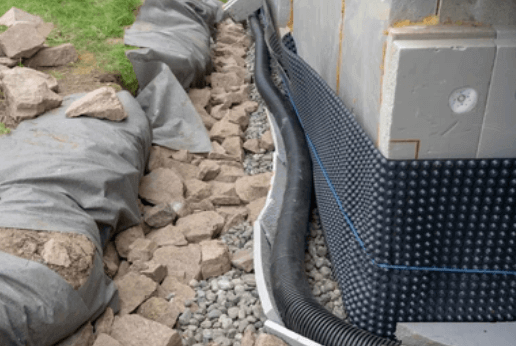
French drains are designed with several layers of protection against premature failure. A properly installed system uses geotextile filter fabric around the pipe and gravel to prevent fine soil particles from migrating into the drainage layer. The gravel itself provides void space for water to collect and flow toward the pipe.
In practice, however, no filter system is perfect over the long term. Several mechanisms cause gradual French drain degradation:
Sediment infiltration: Fine clay particles — which are abundant throughout the DFW area — gradually work through filter fabric, particularly at penetration points or locations where the fabric wasn't installed perfectly continuous. Over years, these particles fill void spaces in the gravel, reducing permeability.
Root intrusion: Tree and shrub roots are drawn to the moisture that accumulates around French drain systems. Over time, roots can penetrate the perforated pipe through the perforation holes, eventually restricting or completely blocking flow.
Organic material accumulation: Leaves, decomposing plant material, and other organic debris that migrates into the system from surface access points or filter fabric failures breaks down and contributes to organic sediment that clogs the gravel layer.
Pipe collapse or crushing: In areas with vehicle traffic overhead or where soil movement has been significant, perforated pipe can be partially crushed or displaced, restricting flow.
When any of these mechanisms advance enough, the French drain's performance degrades — and the homeowner starts seeing the same drainage problems the system was installed to solve.
Signs Your French Drain Needs Cleaning in DFW
Standing water returning to areas the French drain was installed to address. If a yard area that had been significantly improved by French drain installation starts holding water again for extended periods after rain, the drain's performance has likely degraded.
Slow drainage — water that used to disappear quickly now lingers. A French drain that's partially clogged may still drain but more slowly than it should. If areas take noticeably longer to dry after rain than they used to, reduced permeability in the system is a likely cause.
Water backup or overflow at surface access points. If your French drain system includes surface access points or cleanout ports, water visible at those locations during or after rain suggests a blockage downstream.
Muddy or soft areas above the drain line. When a French drain fails, water that's supposed to enter the system instead stays in the surrounding soil — creating persistently soft, muddy areas directly over or adjacent to where the drain was installed.
Reduced discharge at the outlet. A healthy French drain system discharges water at its outlet point during and after significant rain events. If the outlet that previously ran freely during storms is now dry or producing only a trickle, flow through the system has been reduced.
How Long Do French Drains Last Without Cleaning in DFW?
This question doesn't have a single answer because it depends heavily on installation quality, soil conditions, tree coverage, and how the system has been maintained. French drain systems installed with quality filter fabric and proper pipe protection in areas with limited tree coverage and good installation technique can function for 10 to 15 years or more before needing significant maintenance. Systems installed in DFW's heavy clay soil with nearby trees — especially willows, oaks, or other root-aggressive species — may need attention sooner.
The practical answer for most DFW homeowners is to inspect the system's performance annually and schedule professional cleaning when performance noticeably declines, rather than waiting for complete failure.
Professional French Drain Cleaning: What It Involves
Professional French drain cleaning in DFW typically involves a combination of flushing, mechanical cleaning, and in some cases camera inspection to assess the condition of the perforated pipe.
Hydro-jetting: High-pressure water flushing through the perforated pipe dislodges accumulated sediment and organic material, restoring flow capacity. Hydro-jetting is effective for clearing soft blockages and built-up sediment in systems where the pipe is still intact.
Camera inspection: A drain camera inserted into the pipe provides visual assessment of the interior condition — allowing a professional to identify pipe collapse, root intrusion, or other structural issues that flushing alone won't address.
Mechanical augering: For more significant blockages, a mechanical auger or drain snake can break up compacted material that flushing alone doesn't clear.
Outlet clearing: The discharge point of the French drain should be inspected and cleared as part of any cleaning service. A blocked or partially obstructed outlet restricts flow through the entire system regardless of how clean the pipe interior is.
In cases where camera inspection reveals significant pipe collapse, root intrusion that can't be cleared, or structural damage to the drainage system, partial or full replacement of the affected section may be more appropriate than cleaning alone.
French Drain Cleaning vs. French Drain Replacement
Professional cleaning addresses the accumulated sediment and debris that degrades system performance over time. Replacement is necessary when the underlying structure of the system has failed — collapsed pipe, severely damaged filter fabric, or accumulated fine clay that has completely cemented the gravel layer.
Cleaning is the right choice when: The pipe is structurally intact. The gravel layer still has some permeability. Performance issues are recent and progressive rather than complete and longstanding. Camera inspection confirms the system is intact.
Replacement is more appropriate when: Camera inspection reveals significant pipe damage or collapse. The system has been underperforming for many years without maintenance. Root intrusion has progressed to the point where cleaning can't fully restore flow. The original installation was inadequate — poor filter fabric, wrong pipe type, or insufficient slope — and those underlying issues need to be corrected.
Quinn Gutters assesses French drain systems honestly and will tell you clearly which approach makes more sense for your specific situation.
Maintaining Your French Drain for Long-Term Performance
Several practices extend the service life of a French drain system in the DFW area:
Keep the area above and around the drain clear of aggressive root-growing plants and trees. Willow trees, silver maples, and other water-seeking species should not be planted near French drain systems. Check discharge outlets seasonally to ensure they're clear and unobstructed. Have the system professionally inspected if you notice any of the performance decline signs described above. Avoid vehicle traffic over French drain lines when possible, as the weight can crush or displace perforated pipe.
Quinn Gutters: French Drain Cleaning and Service in DFW
Quinn Gutters provides French drain cleaning, inspection, and replacement services for homeowners throughout Fort Worth, Southlake, Colleyville, Keller, Grapevine, and surrounding North Texas communities. We treat drainage as an integrated system — because gutters that work perfectly and a French drain that's failing still leaves your foundation and yard at risk.
Whether your French drain needs a routine flush and inspection or you're dealing with a system that's stopped performing and needs thorough assessment, Quinn Gutters has the experience to diagnose the problem and restore the drainage protection your DFW property needs.

Restore Your French Drain's Performance
Request your free drainage assessment from Quinn Gutters today and let our team get your French drain working the way it was designed to.


