our Blog
French Drain Installation in DFW: Solving North Texas Yard Drainage Problems
French Drain Installation in DFW: Solving North Texas Yard Drainage Problems
If your yard turns into a lake every time it rains in North Texas — or if water consistently pools near your foundation, soaks through your landscaping, or takes days to drain after a storm — you have a drainage problem that isn't going to fix itself. For many DFW homeowners, the most effective long-term solution is a professionally installed French drain system.
French drain installation is one of the most reliable ways to move water away from problem areas around your property, protect your home's foundation from the moisture-related damage that's especially costly on North Texas clay soil, and restore your yard to usable, dry ground after heavy rain. This guide explains how French drains work, why they matter so much in the DFW area specifically, what drainage problems they solve, and what the installation process looks like from start to finish.
What Is a French Drain?
A French drain is an underground drainage system designed to collect and redirect water away from saturated or problem areas on your property. Despite the name, the French drain has nothing to do with France — it was developed by Massachusetts judge Henry French in the 1800s as a farm drainage solution and has been one of the most widely used drainage systems ever since.
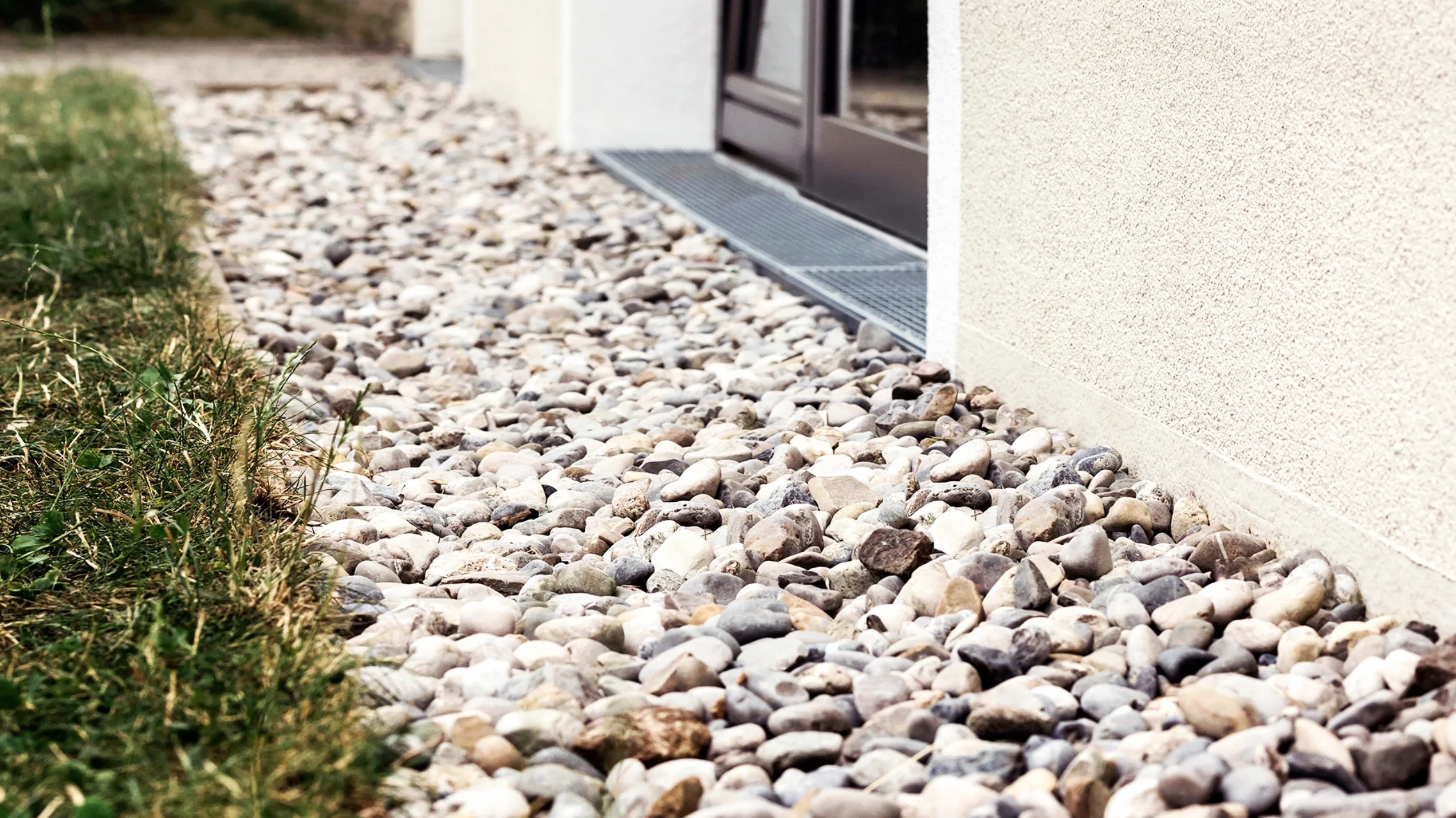
The system is straightforward in concept. A trench is dug along the drainage path, lined with filter fabric, filled with gravel or crushed stone, and fitted with a perforated pipe running through the center. As groundwater or surface water accumulates in the surrounding soil, it seeps through the gravel, enters the perforated pipe through small openings, and is carried by gravity to a discharge point well away from your home — typically to the street, a drainage easement, or a designated outlet on your property.
The result is a system that stays largely out of sight, requires minimal maintenance, and reliably moves water away from where it doesn't belong over the long term.
Why French Drain Installation Matters So Much in North Texas
Yard drainage is a concern in many parts of the country, but DFW homeowners deal with a specific combination of factors that makes a well-designed French drain system more valuable here than in regions with sandier soils and more moderate rainfall.
North Texas Clay SoilThis is the defining factor for drainage problems throughout the DFW metroplex. The expansive clay soil found across Fort Worth, Colleyville, Southlake, Keller, Grapevine, and surrounding cities absorbs water very slowly. When rain falls faster than the soil can process it — which is common during North Texas storms — the water has nowhere to go and pools on the surface or migrates toward the lowest points on the property, which is often directly against the home's foundation.
Clay soil also expands when it absorbs moisture and contracts when it dries out. That repeated expansion and contraction cycle is one of the leading causes of foundation movement and slab cracking in the DFW area. Keeping moisture levels around the foundation stable through proper drainage is one of the most effective things a homeowner can do to protect against foundation damage.
Heavy Seasonal RainfallFort Worth averages 30 to 50 inches of rain per year, concentrated heavily in spring storm season. When several inches of rain fall in a short period on already-saturated clay soil, the drainage demand far exceeds what natural ground absorption can handle. Without a designed drainage system, that excess water sits and pushes.
Flat and Low-Lying LotsMany DFW neighborhoods have relatively flat lot grading that doesn't provide enough natural slope to move water away from structures efficiently. Homes at the base of a slope — or properties where neighbors' runoff migrates onto the lot — are especially prone to standing water and foundation saturation.
Negative Grading Around FoundationsSome properties develop a subtle slope toward the foundation over time as soil settles, mulch breaks down, and landscaping changes are made over the years. Even a slight grade that directs water toward the house rather than away from it can cause significant moisture accumulation at the foundation line. French drain installation near the foundation intercepts that water before it reaches the slab.
Signs Your DFW Property Needs French Drain Installation
Not every wet yard needs a French drain, but these are the signs that drainage has moved beyond a minor inconvenience into a genuine problem worth solving:
Standing water in the yard after rain — if puddles sit in your yard for 24 to 48 hours or longer after a storm, your soil is not draining fast enough on its own. In North Texas clay, this is common and it's exactly the situation French drain installation is designed to address.
Consistently soggy or spongy turf — areas of the yard that stay soft and wet even between rain events indicate that groundwater is staying near the surface. Grass suffers, roots rot, and the area becomes unusable. French drain installation pulls that subsurface moisture away and allows the soil to dry.
Water pooling near or against the foundation — this is the most urgent drainage situation a DFW homeowner can face. Water consistently sitting against the foundation saturates the surrounding clay and applies hydraulic pressure that leads to foundation movement over time. A perimeter French drain intercepting that water before it reaches the foundation is the most direct solution.
Erosion channels or bare spots in the lawn — when water moves across the surface without a controlled drainage path, it cuts channels through topsoil and mulch, eroding landscaping and leaving bare patches where vegetation can't survive.
Basement or crawl space moisture — if you have a basement or a pier and beam foundation with a crawl space that shows signs of moisture or flooding after heavy rain, water is migrating toward and beneath the structure. French drain installation along the foundation perimeter significantly reduces subsurface water pressure.
Downspout discharge creating a drainage problem — downspouts that terminate too close to the foundation or discharge into a low area that doesn't drain well can create localized drainage problems that a French drain paired with proper downspout extensions can solve.
French Drain vs. Surface Drain: Understanding the Difference
Homeowners dealing with yard drainage problems in DFW frequently encounter both French drains and surface drains as potential solutions. Understanding the difference helps you choose the right approach — or in many cases, a combination of both.
French drains work below the surface. They collect groundwater and subsurface moisture from saturated soil and redirect it through a pipe to a discharge point. They are the right choice when the problem is soil saturation, moisture migrating toward the foundation, or areas of the yard that stay wet and spongy for extended periods after rain.
Surface drains work at ground level. They use catch basins — flat grates set into the ground — to capture large volumes of water that accumulate on the surface and direct it away through underground piping. Surface drains are the right choice when the problem is fast-moving high-volume water from heavy rain events that pools on patios, driveways, low-lying lawn areas, or flat spots that have nowhere for the water to flow naturally.
In many North Texas properties, the most complete drainage solution uses both systems together. A French drain addresses the persistent subsurface moisture and soil saturation problem, while a surface drain handles the rapid volume of water that arrives during an intense storm.
Quinn Gutters assesses each property individually to determine which drainage approach — or combination of approaches — makes the most sense for the specific conditions on your lot.
The French Drain Installation Process
A properly designed and installed French drain is not a DIY weekend project — especially in North Texas, where proximity to the foundation, soil conditions, and proper slope calculation all affect whether the system works as intended or creates new problems. Here's what professional French drain installation looks like when done correctly:
Property AssessmentThe first step is understanding where water is coming from, where it's accumulating, and where it needs to go. We walk the property, evaluate the lot grading, identify the problem areas, and determine the optimal drainage path from the collection zone to the discharge point.
Trench Design and LayoutThe trench path is marked based on the assessment. French drains in North Texas are typically installed 12 to 24 inches below grade, depending on the drainage goal. The critical factor is consistent slope — the pipe must maintain at least a 1% grade throughout its run to move water by gravity. A system installed without adequate slope will trap water instead of moving it.
ExcavationThe trench is dug to the specified depth and width along the drainage path. Excavation near a foundation requires particular care — improperly placed drainage too close to the foundation can actually direct additional moisture toward the structure rather than away from it.
Filter Fabric InstallationThe trench is lined with geotextile filter fabric before gravel or pipe goes in. This is a step that DIY installations frequently skip or do wrong. The fabric prevents fine soil particles from migrating into the gravel over time, which is the primary cause of French drain failure — the system fills with fine material, loses permeability, and stops draining. Proper fabric installation is what gives a French drain its long-term performance.
Perforated Pipe and GravelA perforated drain pipe is laid in the trench on a gravel bed, surrounded by additional gravel to the top of the trench. The gravel provides fast-draining void space that collects water from the surrounding soil and directs it into the pipe.
Discharge PointThe pipe must terminate at a proper discharge location — ideally the street curb, a storm drainage easement, or a designated outlet point well away from the foundation and neighboring properties. A pop-up emitter at the discharge end allows water to exit during rain events and closes when dry to prevent debris backflow.
Backfill and Surface RestorationThe trench is backfilled above the gravel and the surface is restored — seeded, sodded, or finished to match the surrounding landscape.
French Drain Maintenance Tips for DFW Homeowners
A properly installed French drain with quality filter fabric and a clean discharge point should last many years with minimal maintenance. These tips will keep your system performing:
Check the discharge point seasonally. Make sure the outlet is clear and unobstructed. Debris, sediment, or plant growth at the discharge end can back up the entire system.
Watch for surface settling over the trench. Some settling of the backfill over the trench is normal in the first year. If a significant depression forms, it can affect surface drainage patterns and should be addressed.
Don't plant deep-rooted plants directly over the drain line. Tree roots in particular will seek out moisture sources and can grow into and obstruct a French drain pipe over time. Keep the area above the drain line clear of aggressive plantings.
If the system stops draining effectively, have it inspected. Reduced performance in a French drain usually means sediment infiltration at a point where the filter fabric has failed or wasn't properly installed. A professional can flush or camera-inspect the line to diagnose the problem.
Quinn Gutters: French Drain Installation and Drainage Solutions Across DFW
At Quinn Gutters, drainage is a core part of what we do. We install French drain systems, downspout extensions, underground drain lines, catch basins, and other drainage solutions for homeowners throughout Fort Worth, Colleyville, Southlake, Grapevine, Keller, and surrounding North Texas communities.
We approach every drainage project the same way — with a thorough assessment of your specific property conditions, an honest recommendation about what will actually solve your problem, and installation that's built to last in the North Texas climate.
Gutters and drainage work together. Getting water off your roof through a properly installed gutter system is step one. Making sure that water discharges well away from your foundation and has a clear path to drain is step two. Quinn Gutters handles both.

Stop Letting Yard Drainage Problems Threaten Your Foundation
Every storm season that passes with standing water sitting against your foundation or saturating the soil around your home adds to the cumulative risk of expensive foundation damage. French drain installation is a one-time investment that pays for itself many times over in prevented repairs.
Request your free drainage assessment and quote from Quinn Gutters today and let us find the right solution for your North Texas property.


