
our Blog
Gutter Drainage and Home Insurance in DFW: What Every Homeowner Should Understand
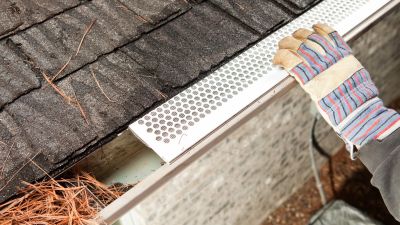
Most DFW homeowners think about their gutter system and their homeowners insurance policy as entirely separate concerns. The gutters are a maintenance item — something to clean and repair. The insurance policy is financial protection — something to file a claim against when disaster strikes. In practice, these two things are more connected than most homeowners realize, and that connection has real financial implications when storm damage occurs or when water damage develops over time.
For homeowners throughout Fort Worth, Southlake, Keller, Colleyville, Grapevine, Trophy Club, Flower Mound, Highland Village, Lewisville, Northlake, Argyle, and the broader DFW metroplex, understanding how gutter maintenance relates to insurance coverage helps avoid the situations where valid claims get complicated by maintenance history — and ensures that post-storm damage is documented and claimed correctly.
How Homeowners Insurance Treats Gutter-Related Claims
Homeowners insurance policies in Texas generally cover sudden and accidental damage — things that happen unexpectedly from specific events like hailstorms, windstorms, and similar weather occurrences. They generally do not cover gradual damage — deterioration that develops over time from ongoing neglect or maintenance failure.
This distinction is directly relevant to gutters in three specific ways:
Hail damage to gutters: covered.When a significant hailstorm damages your gutters — denting aluminum, cracking sealant at joints, displacing hardware — that is the type of sudden, event-specific damage that homeowners insurance is designed to cover. The key is documentation: photographs taken promptly after the storm event showing the specific damage provide the evidence an adjuster needs to assess the claim.
Quinn Gutters works with DFW homeowners on post-hailstorm assessments that document gutter damage in the same timeframe as roofing damage — giving homeowners the written assessment and photographs needed to include gutter replacement or repair in their insurance claim alongside the roofing work.
Gradual water damage from neglected gutters: typically not covered.Water damage to fascia, siding, or interior spaces that developed over time from gutters that were chronically clogged, overflowing, or failing is typically treated as a maintenance failure rather than a covered loss. Insurers who investigate a water damage claim and find evidence that the gutters were in poor condition for an extended period before the damage occurred may deny or reduce coverage on the basis that the damage resulted from deferred maintenance rather than a sudden event.
This is the most direct insurance argument for proactive gutter maintenance: documented regular cleaning and timely repairs create a maintenance record that demonstrates responsible property management — removing the deferred maintenance argument from any subsequent claim.
Foundation damage from drainage failure: complex and often excluded.Foundation damage from the clay soil moisture cycling that DFW's drainage conditions cause is one of the most common and most expensive homeowner expenses in the metroplex — and it's one of the most consistently excluded from standard homeowners insurance coverage. Gradual foundation movement from soil conditions is typically excluded as an earth movement event rather than covered as a sudden damage occurrence.
This means the cost of foundation repairs from years of gutter overflow and drainage neglect falls entirely on the homeowner — reinforcing the economic argument for proactive drainage management even more strongly than the initial installation cost comparison suggests.
The Insurance Documentation Case for Regular Gutter Maintenance
Understanding the insurance dimension of gutter maintenance creates a clear practical argument for scheduling service and keeping records:
Maintained gutters support clean claims.When a hailstorm damages a roof and gutters on a home that has documented regular cleaning and inspection, the claim conversation is straightforward: the system was functioning before the storm event, the storm caused specific damage, the claim covers that damage.
When the same storm hits a home whose gutters were already in disrepair, the claim conversation is more complicated. Was the damage from the storm or from preexisting neglect? Insurance adjusters investigating a water damage claim often look for evidence of prior condition — and deteriorated gutters can muddy the picture in ways that affect claim outcomes.
Written condition reports create a maintenance record.Every Quinn Gutters cleaning visit includes a written condition report documenting what was found and what was done. Over time, these reports create a maintenance history that demonstrates responsible property management. For a DFW homeowner who experiences storm damage several years after beginning professional gutter service, that documentation record is a genuine asset in the claims process.
Post-storm documentation is essential.Regardless of pre-storm maintenance history, the most important insurance-related action after any significant DFW storm event is prompt documentation of damage. Photographs of dented gutters, displaced hardware, and any new staining or overflow evidence created by the storm — taken within 24 to 48 hours of the event — provide the evidence basis for a gutter claim.
Quinn Gutters recommends that every DFW homeowner develop the habit of walking the perimeter after any significant storm event specifically to document conditions while they're fresh and unambiguously storm-related.
Hail Damage and the Gutter Insurance Claim Process
In the DFW area, hail damage insurance claims follow a predictable pattern that gutter damage fits into cleanly when properly documented:
Step 1: Document the damage promptly.Photograph the gutter face for visible denting, photograph any hardware found on the ground, photograph any new staining on the exterior wall or fascia, and photograph the yard and foundation zone if erosion or ponding developed during the storm.
Step 2: Contact your insurance carrier.Report the damage to your homeowners insurance carrier and request a claim number. Mention both roofing and gutter damage specifically — gutter damage is often included in hail claims but needs to be explicitly mentioned to be included in the adjuster's assessment.
Step 3: Get a professional gutter assessment.Contact Quinn Gutters for a written post-storm assessment that documents the specific gutter damage — including photographs, a description of what was affected, and an estimate for repair or replacement. This professional documentation is far more useful in the claims process than homeowner-taken photos alone.
Step 4: Adjuster visit.When the insurance company's adjuster inspects the property, having the Quinn Gutters assessment available for reference helps ensure the gutter damage scope is fully evaluated rather than noted in passing.
Step 5: Scope and settlement.The insurance company issues a damage assessment and settlement offer. For complex claims involving both roofing and gutter replacement, having independent professional assessments of both is the most effective basis for ensuring the full scope is covered.
What Gutter Damage Insurance Typically Covers and Excludes
Generally covered under standard Texas homeowners policies:Hail impact damage to gutter material, hardware, and downspouts from a documented storm event. Wind damage that displaces sections or causes physical structural damage. Storm-driven debris impact that cracks or deforms gutter components.
Generally not covered:Age-related deterioration of gutter material regardless of storm activity. Joint failures from thermal cycling and sealant degradation in sectional systems. Foundation damage from chronic drainage failure, regardless of whether storm events contributed to overflow. Gradual fascia rot from ongoing gutter overflow — classified as maintenance failure rather than sudden damage.
The Connection Between Insurance and Gutter Guard Investment
Gutter guards have a meaningful insurance-related benefit that many DFW homeowners don't consider: by keeping gutters cleaner between service visits, guards reduce the probability of overflow during storms — which reduces the probability of fascia and siding damage that might otherwise blur the line between storm damage and maintenance-related damage in a claim.
A home with functioning gutter guards that keeps the channel clear heading into every major storm event enters that storm with maximum capacity and minimum overflow risk. Post-storm damage to that home is much more clearly attributable to the storm event itself rather than to pre-storm system condition — which simplifies any resulting insurance claim.
Quinn Gutters: Documentation-Focused Service for DFW Homeowners
Quinn Gutters provides written condition reports after every service visit, post-storm assessments with photographs and damage documentation, and professional estimates that can be used directly in insurance claim processes for DFW homeowners throughout Fort Worth, Southlake, Keller, Colleyville, Grapevine, Trophy Club, Flower Mound, Highland Village, Lewisville, Northlake, Argyle, and surrounding North Texas communities.
Whether you need pre-season cleaning that creates a maintained condition record, a post-storm assessment for an insurance claim, or a complete seamless installation that maximizes performance and simplifies future claims — Quinn Gutters serves DFW homeowners with the documentation and professional standards that support responsible property management.

Protect Your Home and Your Insurance Position
Request your free gutter service quote from Quinn Gutters today and let our team help you build both the drainage protection and the maintenance documentation that DFW homeowners need.


