
our Blog
Gutter Guard Types Explained: Which One Is Right for Your DFW Home?
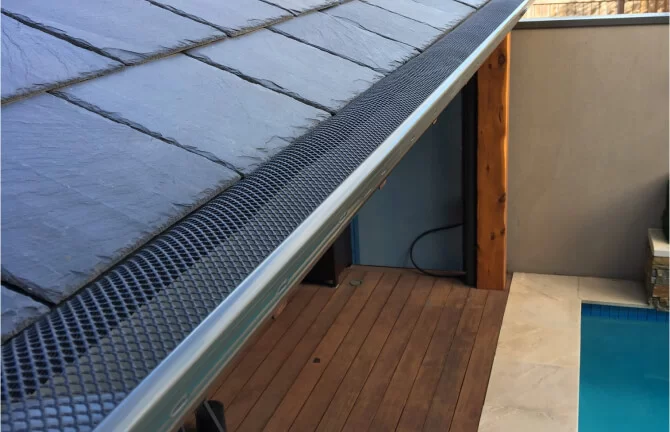
The gutter guard market has expanded dramatically in the past decade — offering DFW homeowners more options than ever, and making the selection decision more confusing than it needs to be. National advertising from major gutter guard brands creates the impression that one system works for every home, in every climate, with every debris type. For North Texas homeowners, that's not accurate.
DFW's specific debris profile — year-round live oak shedding, Bradford pear blossom fall in spring, pecan debris from late summer through fall, cedar elm throughout — creates conditions that favor some guard designs over others. Understanding how each guard type works, how it performs against North Texas-specific debris, and what its long-term maintenance implications are helps DFW homeowners throughout Fort Worth, Southlake, Keller, Colleyville, Grapevine, Trophy Club, Flower Mound, Highland Village, Lewisville, Northlake, Argyle, Weatherford, Aledo, and the broader metroplex make the right choice for their specific property.
Type 1: Micro-Mesh Gutter Guards
How they work:Micro-mesh guards consist of a frame — typically aluminum — that mounts over the gutter channel, topped with a fine stainless steel or aluminum mesh with openings measured in microns (typically 50 to 200 microns for quality systems). Water flows through the mesh into the channel. Debris sits on top of the mesh and either blows off with wind or accumulates on the mesh surface for periodic removal.
Performance against DFW debris:Micro-mesh is the highest-performing guard type for most DFW conditions. The fine mesh openings block leaf fragments, pine needles, seed pods, Bradford pear blossoms, and shingle grit — the fine-particle debris that standard screen guards allow into the channel. For homes with live oaks and Bradford pears that produce fine, wet debris in spring, micro-mesh significantly outperforms wider-opening alternatives.
Long-term maintenance:Even quality micro-mesh requires periodic attention. Fine debris — particularly DFW's spring pollen — can accumulate on the mesh surface and reduce flow capacity during heavy rain events. Annual inspection and light cleaning of the mesh surface keeps micro-mesh performing optimally.
Best for: Most DFW properties, particularly those with fine debris from Bradford pears, live oaks, and cedar. The highest upfront cost of guard options, but the best long-term performance across DFW's full debris spectrum.
Type 2: Standard Mesh and Screen Guards
How they work:Mesh and screen guards use openings larger than micro-mesh — typically 1/8 inch to 1/4 inch — stretched over a frame that mounts over the gutter channel. Water and small debris pass through; larger debris like whole leaves and large seed pods are blocked.
Performance against DFW debris:Standard mesh guards handle larger debris effectively — whole leaves, large twigs, acorns — but their larger openings allow fine debris to pass through into the channel. Bradford pear blossoms, cedar elm leaves, and the fine fragmented debris that live oaks produce can pass through standard mesh, accumulating in the channel and eventually contributing to blockage.
For DFW properties with dominant large-leaf debris from shade trees and minimal fine debris production, standard mesh can be adequate. For properties with Bradford pears, live oaks, or cedars that shed fine debris continuously, micro-mesh performs significantly better.
Long-term maintenance:Standard mesh guards typically require less surface maintenance than micro-mesh because the larger openings don't accumulate fine debris on the mesh face as readily. However, the fine debris that passes through the mesh accumulates in the channel, requiring periodic channel cleaning despite the presence of guards.
Best for: DFW properties with large-leaf deciduous tree coverage and minimal fine debris production. Less effective for properties with Bradford pears, cedar elm, and continuous live oak shedding.
Type 3: Reverse-Curve (Surface Tension) Guards
How they work:Reverse-curve guards use the surface tension of water to guide it around a curved surface and into the gutter channel while debris theoretically falls away at the leading edge. The concept relies on water adhering to the curved surface and following it into the channel rather than overshooting.
Performance against DFW debris:Reverse-curve guards work reasonably well for steady moderate rainfall but can underperform during DFW's high-intensity spring storms. When water volume exceeds the surface tension capacity — which happens regularly during DFW's peak storm events — water overshoots the gutter entirely rather than entering the channel. The result is overflow alongside a "covered" gutter, which can be confusing and problematic for homeowners who assume the guard is functioning.
Additionally, fine debris from Bradford pears and live oak can adhere to the curved surface and eventually enter the channel, and significant debris can accumulate at the leading edge under the curve where it's difficult to clean.
Long-term maintenance:Reverse-curve guards require periodic cleaning of debris accumulation at the leading edge and are prone to the accumulation of fine material against the underside of the curve. They're also less visually compatible with some DFW neighborhoods' HOA requirements because of their more prominent profile.
Best for: Light-to-moderate debris situations with moderate rainfall intensity. Generally not the best choice for DFW's heavy debris loads and spring storm intensity.
Type 4: Perforated Aluminum Guards
How they work:Perforated aluminum guards are solid aluminum covers with a pattern of small holes punched through them — covering the gutter channel completely while allowing water to pass through the perforations. They're more substantial than mesh systems and can handle more physical debris weight.
Performance against DFW debris:Perforated aluminum guards provide good large-debris protection but can become clogged with fine organic material that packs into the perforations over time. The hole size determines the debris filtration level — larger perforations let more debris through but clog less readily; smaller perforations provide better filtration but may clog more readily with DFW's fine spring debris.
Long-term maintenance:Perforated aluminum requires periodic cleaning when fine debris accumulates in the perforations and reduces flow capacity. The solid aluminum construction makes them durable and wind-resistant — a meaningful advantage in DFW's spring storm environment.
Best for: Properties with predominantly larger debris and moderate fine debris production. A reasonable middle-ground option for DFW homes that don't have the most demanding fine debris challenges.
Type 5: Foam Inserts
How they work:Foam insert guards fill the gutter channel with porous foam, allowing water to seep through the foam into the channel while debris sits on top of the foam. No mounting hardware or frame required.
Performance against DFW debris:Foam inserts are the weakest performers in DFW's specific conditions. The foam surface traps Bradford pear blossoms, fine organic debris, and other material rather than shedding it. Over one to two years in North Texas conditions, foam inserts typically become clogged with decomposing organic material, support biological growth, and actually retain more moisture against the channel than they prevent from entering it.
The DFW summer heat accelerates foam degradation — UV and heat cause the foam to break down faster than in milder climates, reducing its effective service life significantly.
Long-term maintenance: The maintenance burden of foam inserts in DFW often exceeds that of no guards at all, as cleaning the foam requires removal, cleaning, and reinstallation. Quinn Gutters does not recommend foam insert guards for DFW properties.
Best for: Short-term, budget-constrained situations only. Not appropriate as a long-term solution for North Texas conditions.
Type 6: Brush Inserts
How they work:Brush insert guards are cylindrical brushes installed inside the gutter channel with bristles facing up. The theory is that water flows through the bristles while debris is caught on the bristle surface and blows away with wind.
Performance against DFW debris:Similar to foam inserts, brush guards in DFW conditions trap rather than shed fine debris — particularly the sticky Bradford pear blossoms and live oak debris that are common in established DFW neighborhoods. Debris works into the bristles and is difficult to remove without pulling the brush from the channel entirely. Biological growth develops in the debris-laden bristles in DFW's humid spring conditions.
Best for: Not recommended for DFW's year-round fine debris environment.
Quinn Gutters' Guard Recommendation for DFW Homeowners
For most DFW properties — particularly those in established neighborhoods with significant live oak, Bradford pear, cedar elm, or pecan coverage — micro-mesh guards are the appropriate choice. Quinn Gutters installs micro-mesh systems that address DFW's full debris spectrum — blocking fine spring blossom material alongside larger seasonal debris while maintaining adequate flow capacity for peak spring storm volumes.
For properties with primarily large-leaf debris and minimal fine debris, standard mesh guards provide adequate protection at a more accessible price point. Quinn Gutters assesses each property's specific tree coverage and debris profile before recommending a guard system — rather than applying a single product to every installation.

Get the Right Gutter Guards for Your DFW Home
Request your free gutter guard assessment from Quinn Gutters today and let our team recommend the guard system that actually performs for your North Texas property's specific debris conditions.


