
our Blog
How Gutters Protect Your Foundation: What Every North Texas Homeowner Should Know
How Gutters Protect Your Foundation: What Every North Texas Homeowner Should Know
If you own a home in the DFW metroplex, you've probably heard about foundation problems. North Texas has one of the highest rates of foundation repair activity in the country — and clay soil is the primary reason. What most homeowners don't fully appreciate is how directly their gutter system affects the health of their foundation. The connection between gutter performance and foundation stability in North Texas is not indirect or theoretical — it's one of the most important protective relationships in your home's drainage system.
This guide explains exactly how gutters protect your foundation on North Texas clay soil, what happens when gutters fail to do that job, and what you can do to make sure your gutter system is providing the foundation protection your home needs.
Understanding North Texas Clay Soil
The expansive clay soil found throughout the DFW metroplex — including Fort Worth, Southlake, Colleyville, Keller, Grapevine, and surrounding communities — is what engineers call "expansive" or "shrink-swell" clay. It has a defining characteristic: it expands when it absorbs water and contracts when it dries out.
During a wet North Texas spring, the clay around your foundation absorbs moisture and expands — sometimes by as much as 10 to 15 percent. During a dry North Texas summer, that same clay dries out and contracts. Through repeated wet-dry cycles over years and decades, the soil under and around your foundation is constantly moving — and that movement creates the foundation cracking, settling, and shifting that is so prevalent throughout the DFW area.
The key insight for homeowners is this: the moisture content of the soil around your foundation is one of the most important factors in how much that soil moves. And your gutter system has enormous influence over how much moisture reaches the soil immediately surrounding your foundation.
How Gutters Control Foundation Moisture
Your roof acts as a massive catchment surface during rainfall. Even a modest roof on a standard DFW home collects hundreds to thousands of gallons of water during a significant rain event. Without gutters, all of that water runs off the roof edge, falls to the ground along the drip line directly at the base of your home, and saturates the soil immediately adjacent to your foundation.
That direct, concentrated water delivery to the foundation zone is precisely what drives the moisture swings in the surrounding clay soil that cause foundation movement. Heavy spring rain saturates the clay around your foundation to maximum moisture levels. Summer heat dries it out to minimum levels. The bigger that swing, the more the clay moves, and the more stress is placed on your foundation over time.
Gutters interrupt that cycle by collecting roof runoff and carrying it through a controlled system to downspouts that discharge well away from the foundation. When gutters are working properly, water that falls on your roof during a rainstorm is directed to a point four, six, or more feet away from the foundation before it reaches the ground. The soil immediately around your foundation experiences far less moisture fluctuation — and far less movement.
What Happens When Gutters Fail to Protect the Foundation
Gutters that are clogged, overflowing, improperly pitched, or directing downspouts too close to the foundation are not providing foundation protection — they're creating the same moisture problem as having no gutters at all, or in some cases making it worse.
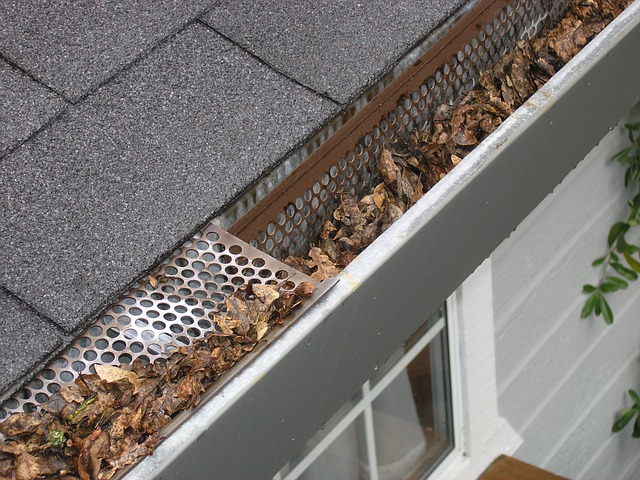
Clogged gutters:Gutters that are blocked with leaves and debris overflow along their entire length during rain events. The overflow falls directly at the foundation line — concentrated, predictable, and cumulative. Every rain event that occurs with clogged gutters adds another cycle of saturation to the soil immediately around your foundation.
Overflowing gutters:Gutters that overflow because they're undersized, improperly pitched, or have too few downspouts produce the same foundation saturation problem as clogged gutters, even when the channel is clean.
Downspouts discharging too close to the foundation:A gutter system that functions perfectly but discharges water at the base of the home — rather than several feet away — is directing all that collected roof runoff to exactly the wrong place. The downspout becomes a direct delivery system for roof water to the foundation zone.
No gutters at all:Homes without gutters experience the full direct runoff from the roof edge. In North Texas, with its heavy spring rainfall on expansive clay soil, the absence of gutters is one of the most significant risk factors for foundation damage available.
Long-term foundation consequences of gutter failure:Foundation repairs in the DFW area typically cost $10,000 to $25,000 for significant work — and can exceed $50,000 for severe cases. Most foundation repair policies through homeowners insurance are limited or non-existent for gradual soil movement damage. The cost of maintaining a functioning gutter system is a small fraction of what foundation repair costs — making gutter installation and maintenance one of the best return-on-investment decisions a North Texas homeowner can make.
Signs That Your Gutters Are Affecting Your Foundation
Homeowners sometimes experience foundation issues without connecting them to gutter performance. These are the signs that your gutter system may be contributing to foundation stress:
Water pooling in the soil immediately below the gutter drip line after rain — indicating overflow is reaching the foundation zone. Soil that stays consistently wet around the base of the home after rain even as the rest of the yard dries. Foundation cracks that appear or worsen following wet spring seasons. Doors or windows that stick or bind more after heavy rain than after dry periods — a classic sign of foundation movement driven by soil moisture changes. Staining or discoloration on the exterior wall or foundation surface at and below the gutter line.
If you're seeing any of these signs, a professional gutter inspection and assessment is a logical early step — often much less expensive and much faster than foundation repair.
What Proper Gutter Installation Does for Your Foundation
A properly installed seamless gutter system, correctly sized for your roofline and equipped with downspouts that discharge adequately away from the foundation, does three things for your North Texas home's foundation:
First, it captures virtually all roof runoff during rain events and routes it into a controlled drainage path rather than allowing it to fall at the foundation line.
Second, it discharges that water at a point well removed from the foundation — so the soil moisture at the foundation zone is influenced by natural rainfall patterns and normal drainage, not by the concentrated delivery of roof runoff directly to the base of the structure.
Third, when combined with proper drainage solutions like downspout extensions, underground drain lines, or French drains, it manages the full water cycle from roof to distant discharge — maintaining the soil moisture stability around your foundation that protects the slab over time.
Maintaining Your Gutter System for Maximum Foundation Protection
A gutter system that exists but doesn't function isn't protecting your foundation. Regular maintenance keeps the system performing at the level your foundation depends on.
Clean your gutters at minimum twice a year — late spring and late fall — to ensure the channel is clear for North Texas storm events. Inspect after major storms for hail damage, displaced sections, or debris accumulation. Check that downspouts are flowing freely and discharging adequately away from the foundation. Consider gutter guards to reduce the maintenance burden and ensure the system stays clear between scheduled cleanings.
Quinn Gutters provides gutter cleaning, inspection, and maintenance services for homeowners throughout DFW — keeping the systems we install performing at the level your foundation protection requires.
Quinn Gutters: Foundation Protection Through Professional Gutter Installation
Quinn Gutters installs seamless gutter systems designed specifically for the drainage demands of North Texas homes on expansive clay soil. Every installation starts with an honest on-site assessment of your roofline, your downspout layout, and your foundation's specific drainage needs — because foundation protection on DFW clay requires more than just hanging gutters.
We serve homeowners throughout Fort Worth, Southlake, Colleyville, Keller, Grapevine, and surrounding North Texas communities with the professional installation and long-term service that protects your home's most valuable structural asset.

Protect Your Foundation Before the Next Storm Season
Request your free quote from Quinn Gutters today and let our team design a gutter system that provides the foundation protection your North Texas home needs.


