
our Blog
How Often Should You Clean Your Gutters in North Texas?
How Often Should You Clean Your Gutters in North Texas?
Gutter cleaning is one of those home maintenance tasks that's easy to put off — until you're standing in your yard watching water pour over the side of your house during a rainstorm. For homeowners across the DFW metroplex, keeping up with gutter cleaning isn't just a good habit. It's one of the most practical things you can do to protect your home from water damage, foundation problems, and costly repairs.
But how often should you actually be cleaning your gutters in North Texas? The honest answer is: probably more often than you think. This guide breaks down the right cleaning schedule for DFW homeowners, what factors affect how quickly your gutters clog, warning signs to watch for, and tips to keep your system flowing properly between professional cleanings.
The Standard Recommendation — And Why North Texas Is Different
Most general home maintenance guides recommend cleaning your gutters twice a year — once in late spring and once in late fall. For many parts of the country, that's a reasonable baseline. In North Texas, it's often not enough.
The DFW area presents a combination of factors that put above-average stress on gutter systems throughout the year. Fort Worth and surrounding cities see anywhere from 30 to 50 inches of rain annually, with spring storm season bringing intense, fast-moving downpours that can overwhelm a partially clogged gutter in minutes. Add in the tree coverage common in established neighborhoods, seasonal debris loads, and the consistent wind that moves material from one part of the roof to another — and you have a region where gutters need more attention than the national average suggests.
For most North Texas homeowners, a minimum of two cleanings per year is the starting point, not the full picture.
How Often You Should Really Clean Your Gutters in DFW
The right gutter cleaning schedule for your home depends on several specific factors. Here's how to think through it:
Twice a Year — The BaselineIf your property has minimal tree coverage and your gutters are in good condition, two cleanings per year — late spring and late fall — will handle the most common debris cycles. Late spring cleaning removes pollen, seed pods, and debris that accumulates through winter and early spring. Late fall cleaning clears leaves before cooler temperatures set in.
Three Times a Year — Moderate Tree CoverageIf your property has a moderate number of trees — especially live oaks, pecans, cedar elms, or sweetgums — you'll want to add a mid-summer cleaning to your schedule. North Texas trees are notorious for shedding small debris year-round, not just in the fall. Pecan trees in particular drop heavy nuts and leaf clusters that can accumulate quickly and stress gutter systems.
Four Times a Year — Heavy Tree CoverageIf you have multiple large trees with overhanging branches close to your roofline, quarterly gutter cleaning is the most protective approach. The debris load in these situations fills gutters faster than most homeowners expect, and a single clogged downspout during a heavy storm can cause overflow damage very quickly.
After Every Major StormRegardless of your regular schedule, North Texas homeowners should inspect — and often clean — gutters after any significant storm event. High winds push debris off the roof and into the gutters. Hail can dislodge material that had been sitting dry on the roof for months. Heavy rain can wash debris into downspout openings and create blockages that weren't there before the storm.
Warning Signs Your Gutters Need Cleaning Right Now
Your gutters will show you when they need attention if you know what to look for. These are the most common signs DFW homeowners notice when gutter cleaning is overdue:
Water overflowing the sides during rain. This is the most visible sign of a clogged gutter. When debris blocks the flow path, water has nowhere to go except over the edge — which sends it directly down your exterior walls and toward your foundation.
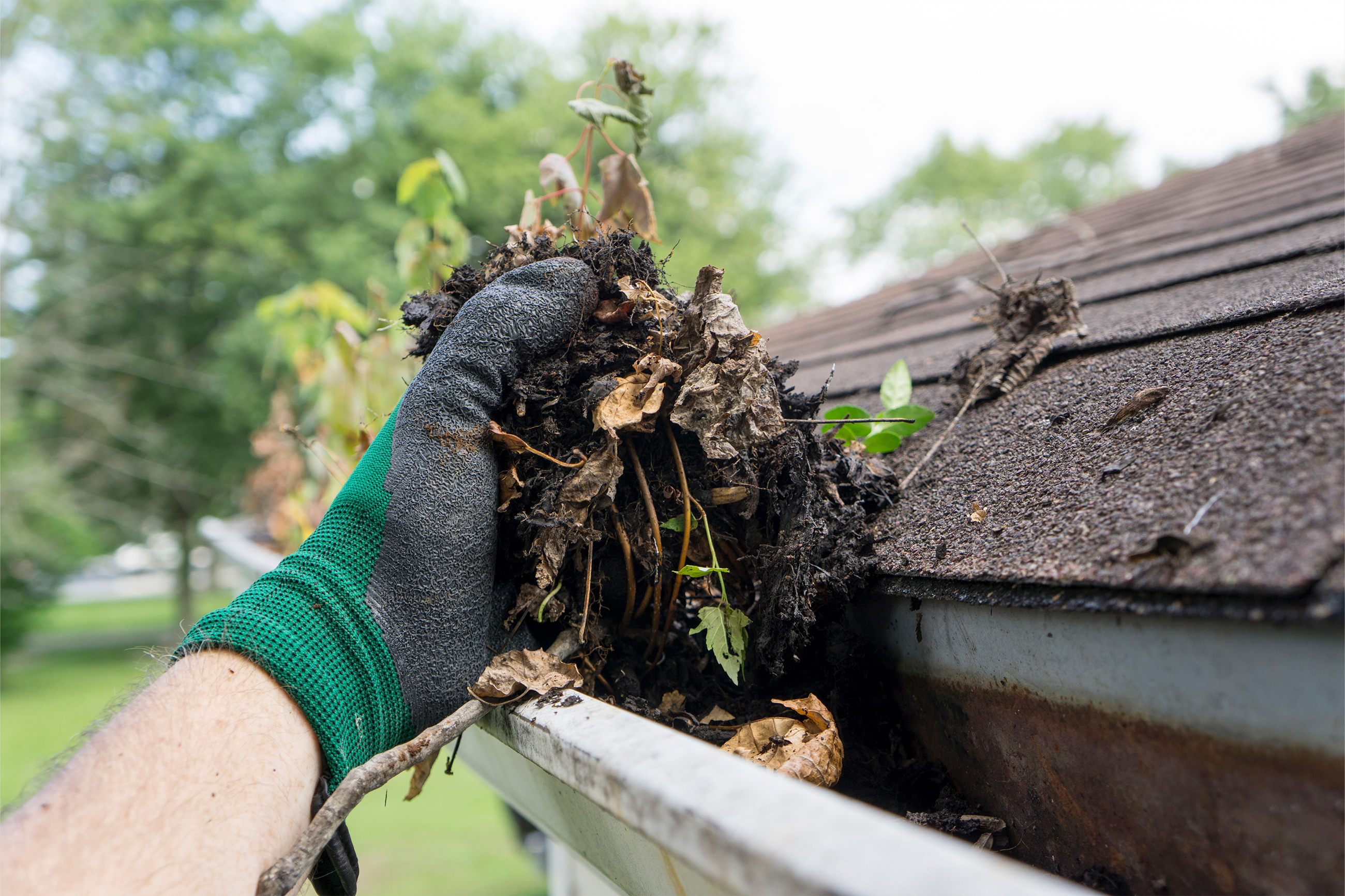
Visible debris or plant growth in the gutters. If you can see leaves, sticks, or even small plants growing out of your gutters from the ground, the system is well overdue for a cleaning. Plant growth indicates debris has been sitting long enough to retain enough moisture to support germination.
Sagging gutters. Standing water and debris buildup are heavy. When gutters hold that weight for extended periods, the hangers and brackets that secure them to the fascia begin to pull loose. Sagging sections are a sign that the system has been carrying too much load for too long.
Staining on the siding or fascia. Dark streaks or staining running down the exterior walls below the gutter line indicate that water has been spilling over consistently. This kind of prolonged moisture exposure deteriorates paint, wood, and siding materials over time.
Pests nesting near the roofline. Clogged gutters filled with moist, decomposing debris are attractive nesting environments for birds, wasps, mosquitoes, and rodents. If you're noticing increased pest activity around your gutters or roofline, a buildup of organic material is often the reason.
Standing water in the gutters after rain stops. Gutters should drain completely within a few hours of rainfall ending. If water is sitting in the channels well after the rain has passed, there's a blockage somewhere in the system — most commonly in the downspout or at a corner.
Foundation pooling after storms. Water collecting around the base of your home after rain is one of the most serious indicators of a drainage failure. On North Texas clay soil, that water causes the kind of repeated expansion and contraction that leads to foundation movement over time.
What Happens When Gutter Cleaning Gets Neglected
Understanding the consequences of neglected gutter maintenance helps put the cost of regular cleaning in perspective. Here's what DFW homeowners commonly deal with when gutter cleaning gets skipped too many times:
Foundation damage is the most expensive outcome. Water that pools around your foundation on North Texas clay soil causes the ground to swell and contract with moisture changes. Over time, this movement cracks slabs, shifts walls, and leads to uneven floors. Foundation repairs in the DFW area routinely cost $10,000 or more and are rarely covered by homeowners insurance.
Fascia rot develops when water sits behind or against the fascia board due to overflowing gutters. Rotting fascia is structurally important — it's what your gutters are actually mounted to — and replacing it adds cost and complexity to any future gutter work.
Roof damage can develop when water backs up under the roof edge due to clogged gutters. This moisture finds its way under shingles and into the roof deck, creating conditions for rot and mold that can spread quickly if not addressed.
Mosquito breeding. This is a real concern in Fort Worth specifically. Stagnant water in clogged gutters is one of the most common mosquito breeding sites around residential properties. Keeping gutters clean and flowing is one of the simplest ways to reduce mosquito pressure on your property.
Practical Gutter Cleaning Tips for North Texas Homeowners
Whether you're handling gutter cleaning yourself or scheduling a professional service, these tips will help you get more out of your maintenance routine:
Work from a stable ladder, not the roof. Getting on the roof to clean gutters increases fall risk significantly. A properly positioned ladder against the fascia is the safer and more controlled approach for single-story homes.
Always flush the downspouts. Cleaning the gutter channel without flushing the downspouts is only half the job. Run water through each downspout after cleaning to confirm it's flowing freely all the way to the ground. A clogged downspout defeats the purpose of a clean gutter.
Check the pitch while you're up there. Gutters should slope slightly toward the downspout — roughly a quarter inch of drop for every ten feet of run. If you notice water sitting flat in the channel after flushing, the pitch may need adjustment.
Look for damage while you clean. Gutter cleaning is the perfect time to inspect for loose hangers, separated joints, cracks, or sections that are pulling away from the fascia. Catching these issues early keeps a minor repair from becoming a full replacement.
Trim overhanging branches. If tree branches hang directly over your roofline, trimming them back reduces the debris load significantly. It's one of the most effective long-term ways to reduce how often your gutters need cleaning.
Consider gutter guards. If you're cleaning your gutters three or four times a year and the maintenance burden feels unsustainable, gutter guards are worth considering. Quinn Gutters installs gutter guard systems that significantly reduce debris buildup in the channel, cutting cleaning frequency for most homeowners to once a year or less.
When to Call a Professional for Gutter Cleaning
Single-story gutter cleaning is manageable for most homeowners who are comfortable on a ladder. Two-story homes are a different story. The risk of a fall increases substantially at height, and professional gutter cleaning services bring the right equipment, safety gear, and experience to do the job efficiently and safely.
Professional gutter cleaning also has a secondary benefit — an experienced eye will catch damage, drainage issues, or early warning signs that most homeowners miss while doing the job themselves. A clogged downspout that hasn't been flushed, a section that's pulling away from the fascia, or a pitch problem that's causing water to sit — these are the kinds of things that get caught during a professional cleaning and addressed before they become expensive repairs.
At Quinn Gutters, our gutter cleaning service goes beyond removing debris. We flush downspouts, check the system for damage, and let you know if anything needs attention — so you're not just maintaining your gutters, you're protecting your whole home.
Serving DFW Homeowners Who Want Their Gutters Done Right
Quinn Gutters serves homeowners across Fort Worth, Colleyville, Southlake, Grapevine, Keller, and the surrounding North Texas communities. Whether you need a one-time cleaning, a regular maintenance schedule, gutter guards to reduce your maintenance burden, or a full seamless gutter installation — we handle it with the professionalism and attention to detail your home deserves.

Keep Your Gutters Clean and Your Home Protected
Don't wait until you have water pouring over your roofline or pooling around your foundation to think about gutter cleaning. A consistent maintenance routine is far less expensive than the repairs that follow when gutters are ignored.
Request your free quote from Quinn Gutters today and let our team help you build a gutter maintenance plan that protects your home year-round.


