
our Blog
How to Read Your Home's Exterior for Gutter Problems: A DFW Visual Guide
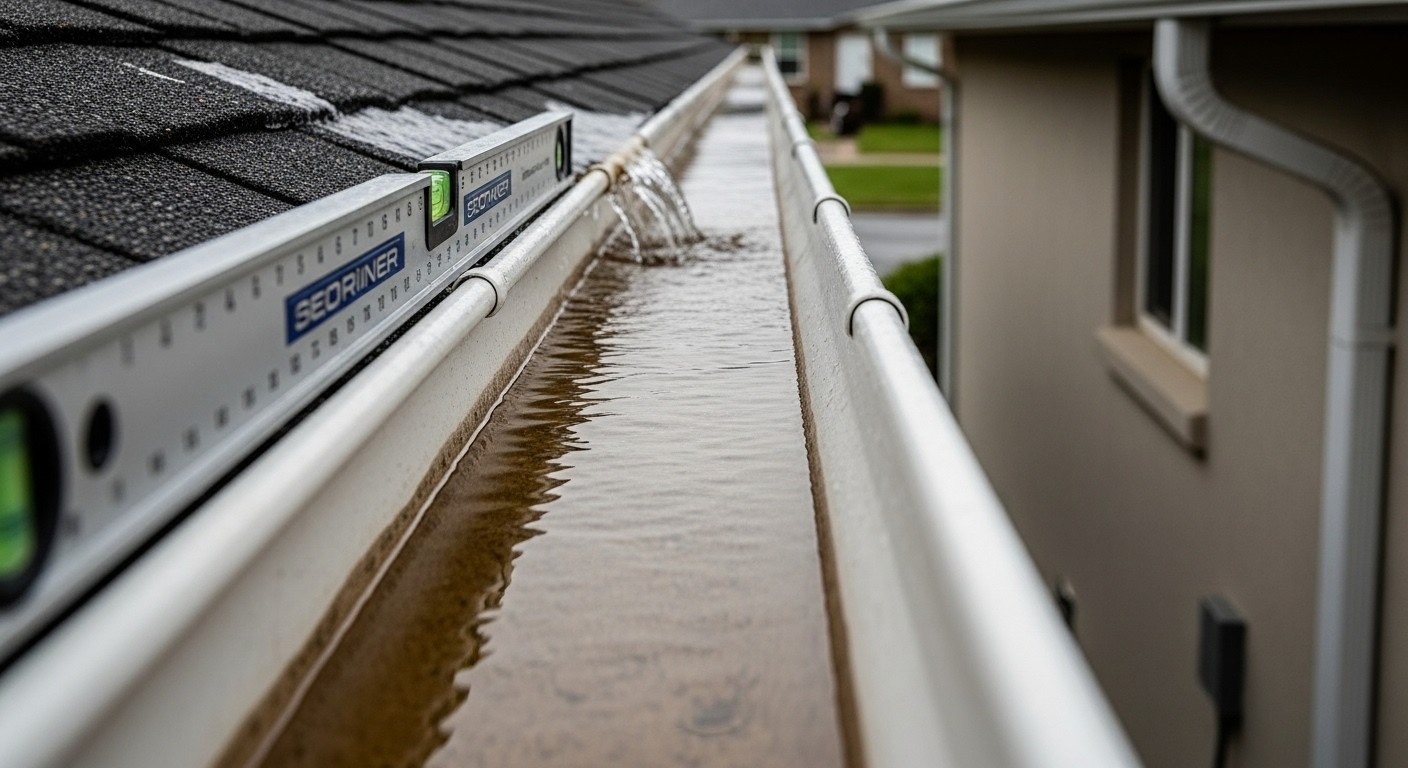
Your home's exterior is constantly telling you things about how well your drainage system is — or isn't — working. The problem is that most of the messages are written in a language most homeowners haven't learned to read. Dark staining below the gutter line, erosion patterns at the foundation, paint failure in specific locations, soft spots on fascia boards — every one of these is a clue. Knowing what they mean helps you catch gutter problems before they become expensive ones.
For homeowners throughout Fort Worth, Southlake, Keller, Colleyville, Grapevine, Trophy Club, Watauga, Hurst, Euless, Bedford, Haltom City, Benbrook, Azle, Mansfield, Burleson, and the broader DFW area, this visual guide covers exactly what to look for, where to look for it, and what each sign indicates about your gutter system's condition.
Starting the Walk-Around: What to Look For and Where
The most effective home exterior inspection is a simple walk-around — a slow, systematic circuit of your home's perimeter that takes 15 to 20 minutes and covers the full roofline, exterior walls, foundation zone, and downspout discharge areas. Here's what to assess at each zone:
Zone 1: The Gutter Line (From the Ground)
Start by looking at the gutter line itself — the bottom edge of the gutter channel as it runs along the roofline — from the ground.
What healthy gutters look like from the ground:A straight, consistent line with uniform height and consistent contact with the fascia from end to end of each run. No visible sag in the middle of runs, no sections that appear lower than their neighbors, and no visible gaps between the back of the gutter and the fascia.
Signs of problems:
Sagging in the middle of a run indicates hanger failure, accumulated debris weight, or fascia deterioration. Even a moderate sag creates a low point where water collects rather than flows — compounding over time into standing water, corrosion, and additional weight that accelerates the failure.
Visible gap between gutter back and fascia at any point along the run means the section has separated from the roofline. A separated section is no longer collecting water effectively — it's decorative at best and directing water behind it to the fascia at worst.
Hardware on the ground below the roofline — screws, hanger brackets, sections of gutter material — are physical evidence of active system failure. Note where along the roofline the hardware appears to have fallen from and make it a priority inspection point.
Visible denting on the gutter face after a storm indicates hail impact — a signal that the system needs professional post-storm assessment even when the denting appears minor.
Zone 2: The Exterior Walls Below the Gutter Line
Move your attention to the exterior wall surface directly below and for several feet beneath the gutter line. This zone captures the evidence of chronic overflow, joint leaks, and corner failures that have been developing over multiple storm seasons.
What healthy exterior walls look like:Consistent paint condition and coloring from the gutter line down, with no pattern of discoloration that corresponds to gutter run locations or corner positions.
Signs of problems:
Dark vertical streaks running down from the gutter line are the most common and most easily recognized indicator of chronic gutter overflow. The streaking follows the path of water that has been running down the exterior wall with every rain event — depositing mineral deposits, dirt, and biological material in a consistent pattern. On brick homes, this appears as rust-colored or dark mineral staining. On painted surfaces, it appears as discoloration that doesn't wash off with rainfall.
The width and intensity of the streaking gives information about severity — narrow, faint streaks indicate intermittent overflow; wide, intense streaks indicate chronic overflow that has been occurring through multiple storm seasons.
Concentrated staining at corner locations running down both walls from a corner junction indicates a corner miter joint failure in the gutter system — water escaping at the corner and running down both wall faces simultaneously.
Paint bubbling or peeling in a pattern below the gutter line indicates moisture has been contacting the painted surface repeatedly — causing the paint to lose adhesion from beneath. This failure pattern is localized to the overflow zone, not uniformly distributed across the wall.
Efflorescence (white chalky deposits) on brick or masonry below gutter sections indicates moisture is moving through the masonry repeatedly — the direct result of gutter overflow contacting the brick face with every significant rain event.
Biological growth (dark green or black algae, mildew) concentrated in a band below the gutter line and more intense than growth on other parts of the wall indicates that specific section of wall receives more sustained moisture than the surrounding surfaces. This pattern is particularly visible on north-facing and shaded walls where biological growth is favored by shade and moisture combination.
Zone 3: The Fascia and Soffit
Look at the fascia board — the horizontal trim board running along the lower edge of the roofline directly behind and below the gutters — as closely as the ground-level view allows.
What healthy fascia looks like:Consistent paint condition and coloring, no visible discoloration or staining behind the gutter channel, and gutters that appear to be flush against the fascia face without visible gaps.
Signs of problems:
Paint failure on the fascia face — specifically where the back of the gutter contacts the fascia — appears as darkening, paint peeling, or visible surface changes in a pattern that corresponds to the gutter's rear edge position. This indicates water has been contacting the fascia at that location through overflow or rear-channel joint leaks.
Visible softening, pitting, or biological growth on the fascia where it contacts or is adjacent to the gutter are signs of moisture absorption that has advanced beyond surface paint failure into the wood substrate. Pressing on these areas (accessible from a ladder) would reveal soft or spongy resistance rather than firm wood — indicating active rot development.
Staining on the soffit face — the horizontal surface beneath the roof overhang — appearing in patterns that suggest water is running from the fascia area down onto the soffit indicates that moisture has migrated beyond the fascia into the structure behind it.
Zone 4: The Foundation and Grade Level
Walk slowly around the full foundation perimeter and look at both the soil and concrete surface conditions at and adjacent to the foundation.
What healthy foundation-level drainage looks like:Dry soil adjacent to the foundation after rain has passed. Positive grade (sloping away from the structure) throughout the perimeter. No erosion channels, no bare soil patches below the roofline drip line, no standing water at downspout discharge points.
Signs of problems:
Soil that remains wet or soft for extended periods after rain adjacent to the foundation indicates that water is being delivered to that zone consistently in amounts that exceed the soil's drainage capacity. On DFW's clay soil, this is the condition that drives the expansion and contraction responsible for foundation movement.
Erosion channels running from below the roofline — particularly in landscape beds along the foundation perimeter — trace the path of water that has been falling from the roof edge without gutter control. These channels carve deeper with each rain event and indicate either missing gutters, overflowing gutters, or downspout discharge that's creating concentrated flow.
Bare spots in mulched beds along the foundation perimeter — where mulch has been repeatedly washed away — indicate the same concentrated water delivery. Homeowners who find themselves replacing mulch along the foundation line after every major storm are often dealing with gutter overflow or downspout discharge issues.
Standing water adjacent to downspout discharge points indicates that the discharge location is receiving more water than the surrounding soil can absorb — typically from downspouts that discharge too close to the foundation and concentrate roof runoff at a single point.
Efflorescence on concrete foundation surfaces at or near grade indicates moisture has been moving through the concrete repeatedly — a sign that the soil against the foundation is being consistently saturated.
Zone 5: The Downspouts
Examine each downspout individually — at the top where it connects to the gutter outlet, at any bends or elbows, and at the ground-level discharge point.
Signs of problems:
Visible gap or misalignment at the connection between the downspout and the gutter outlet indicates the connection has loosened — potentially creating a leak that directs concentrated water to the exterior wall at the outlet location.
Denting, cracking, or displacement anywhere along the downspout run from hail impact or storm-driven debris.
Vegetation or biological growth at the top of the downspout indicates standing water in the outlet — a sign of backpressure from a blockage in the downspout itself.
Erosion or wet soil specifically at the base of the downspout indicates high-velocity water discharge that isn't being adequately dispersed. If the downspout is terminating right at the foundation, this is also a foundation saturation concern.
What to Do With What You Find
A thorough walk-around that identifies any of the signs described above provides the information needed for a productive conversation with Quinn Gutters. We can assess what you've found, confirm the diagnosis, and recommend the right repair, maintenance, or replacement approach for your specific situation.
Quinn Gutters serves homeowners throughout Fort Worth, Southlake, Keller, Colleyville, Grapevine, Trophy Club, Watauga, Hurst, Euless, Bedford, Haltom City, Benbrook, Azle, Mansfield, Burleson, and surrounding DFW communities.

Let Quinn Gutters Assess What Your Home Is Telling You
Request your free gutter inspection from Quinn Gutters today and let our team translate what your home's exterior is saying about your drainage system's condition.


