
our Blog
North Texas's Most Expensive Gutter Mistake — And How to Avoid It
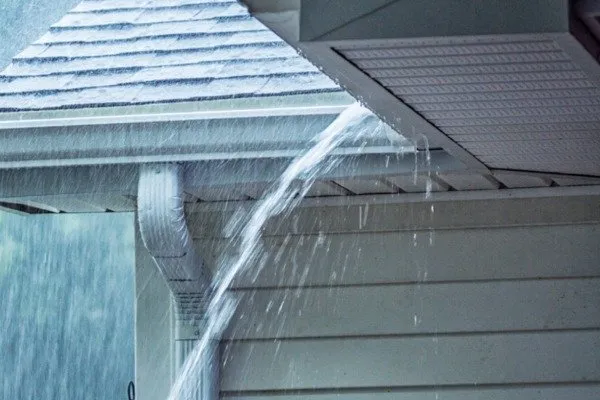
Ask most DFW homeowners what the most expensive gutter mistake is and they'll guess wrong. They'll say something like not cleaning gutters often enough, or buying cheap gutters, or skipping gutter guards. Those are real problems — but none of them is the most expensive mistake North Texas homeowners consistently make.
The most expensive gutter mistake in DFW is simple: waiting too long after problems appear to address them.
It sounds obvious once stated. But the pattern repeats throughout Fort Worth, Southlake, Keller, Colleyville, Grapevine, Trophy Club, Flower Mound, Highland Village, Lewisville, and every other DFW community where homeowners notice a gutter problem — a stain on the wall, a sag in a run, a joint that's starting to drip — and decide to address it "soon" rather than now. Weeks become months. Months become one more storm season. And a $300 repair becomes a $15,000 foundation intervention.
This guide explains why gutter problems compound faster than most DFW homeowners realize, what the actual cost trajectory of delayed action looks like, and what to do instead.
Why Gutter Problems Compound Faster in North Texas
The DFW climate creates a specific compounding dynamic for gutter problems that makes the "I'll get to it later" approach more costly here than in milder climates:
Spring storm season concentrates the damage.North Texas doesn't have evenly distributed rainfall throughout the year. The damage from a failing gutter system is concentrated into the spring storm season — when the DFW area receives the bulk of its annual rainfall in intense events that would challenge a perfect system, let alone a failing one. A joint that started leaking in October and is addressed in November hasn't done much damage. A joint that started leaking in October and is still failing in April has been directing water against the fascia through multiple spring storms — delivering the most damage during the period of maximum rainfall intensity.
Clay soil magnifies foundation consequences.In most of the country, a gutter that overflows during heavy rain events produces cosmetic damage — staining, some erosion — before it reaches structural consequences. On DFW's expansive clay soil, the consequences reach structural significance much faster. Three or four overflow events during spring storm season deliver enough concentrated moisture to the foundation zone to begin the expansion and contraction cycle that causes foundation movement. What takes years in a more forgiving soil type takes a season or two on DFW clay.
Fascia rot spreads once established.Fascia deterioration from gutter overflow doesn't stay localized. Once wood rot establishes in a fascia section, it spreads — both along the board and into adjacent structural components. A small area of soft fascia behind a leaking gutter joint discovered in fall may be a four-foot section of significantly deteriorated wood by the following spring if left unaddressed through the winter rain season.
The Cost Trajectory of Delayed Action
Here's what the cost progression actually looks like for a representative DFW gutter problem scenario:
Year 0: Problem appears.A sectional gutter system develops a joint failure — one seam is leaking, producing a small drip during rain events. The first indications are minor staining on the exterior wall below the joint. Cost to address at this point: $150 to $250 for professional joint resealing.
6 months later (still Year 0): Homeowner notices the staining but delays action.The staining has darkened and expanded. The joint is now leaking more substantially. The fascia behind the joint is beginning to absorb moisture. Cost to address at this point: $250 to $400 for resealing plus early-stage fascia assessment.
1 year later: First spring storm season has passed.The joint failure has been through one full spring storm season. The fascia is now soft at the joint location — the wood has absorbed enough moisture to lose structural integrity in a 12 to 18-inch section. The staining on the exterior wall is significant and has progressed to the paint bubbling stage. Cost to address: $400 to $800 for joint repair plus $300 to $600 for fascia section replacement.
2 years later: Second spring storm season.The soft fascia that wasn't replaced has allowed water to begin working behind the lower course of siding adjacent to the affected section. The fascia deterioration has spread to adjacent sections. The foundation zone below the overflow location shows signs of chronic moisture — slightly elevated moisture in the clay, early soil movement indicators. Cost to address: $800 to $1,500 for gutter repair or section replacement plus $800 to $1,500 for expanded fascia work.
3-4 years later: Cumulative damage is significant.The fascia damage now requires significant repair along the run. The siding damage requires section replacement and repainting. The foundation shows early movement indicators — the first subtle sticking of a door or window near that corner of the home. Foundation assessment indicates the beginning of differential movement. Cost: $2,000 to $4,000 for gutter replacement and fascia work, plus $3,000 to $8,000 for early-stage foundation work. Total: $5,000 to $12,000 for a problem that started as a $150 repair.
This trajectory — modest to catastrophic over two to four years — is not a worst-case scenario. It's the pattern Quinn Gutters regularly encounters when assessing homes throughout the DFW area where homeowners noticed a problem and delayed action.
Why DFW Homeowners Wait Too Long
Understanding the psychology of delayed gutter action helps explain why the pattern is so common:
Out of sight, out of mind. Gutters operate up on the roofline, where homeowners rarely look directly. A joint failure is typically invisible from the ground until staining develops — and by the time the staining is visible, the problem has already been developing for one or more rainy periods.
The problem seems minor. A small drip from a joint during rain events feels trivial compared to the scope of other home maintenance concerns. The magnitude of the consequences — foundation involvement, fascia replacement — is not obvious from observing the initial symptom.
The next storm season seems far away. When a problem appears in October, the next significant rain season feels months away. By the time spring arrives, the problem has often progressed significantly through the intervening winter rain events that didn't make the same impression as spring storms.
Contractors are hard to schedule. Getting a gutter repair scheduled quickly can be challenging during busy seasons. The friction of scheduling delays action, and delays compound into seasons.
What to Do Instead: The Early Action Framework
The antidote to the delayed action pattern is a simple operational framework:
Inspect twice per year with intention. Not a casual glance from the driveway — a deliberate walk-around specifically looking for the early warning signs: new staining below the gutter line, sagging, hardware on the ground, downspout discharge issues.
Address findings within 30 days. When an inspection finds a problem, treat it as a 30-day item rather than a "sometime soon" item. A 30-day repair window catches problems before a full rainy season passes over them.
Schedule before storm season, not after. Pre-storm-season cleaning and inspection in late February or early March — before DFW's spring storm season peaks — prevents the "gutters were already failing when the big storms hit" scenario.
Document and track condition. Quinn Gutters' written condition reports after every service visit create a tracking record that makes subtle year-over-year changes visible — catching the progression from manageable to concerning before it reaches expensive.
Quinn Gutters: Catch Problems Early Throughout DFW
Quinn Gutters serves homeowners throughout Fort Worth, Southlake, Keller, Colleyville, Grapevine, Trophy Club, Flower Mound, Highland Village, Lewisville, Northlake, Argyle, and surrounding DFW communities with inspection-focused cleaning services, honest repair recommendations, and the prompt scheduling that prevents the delayed-action cost spiral.
The most valuable service Quinn Gutters provides for many DFW homeowners isn't the installation — it's the twice-annual cleaning and inspection that catches the joint beginning to fail, the hanger that's starting to pull, the fascia that's showing its first signs of moisture stress — and addresses them when they're still $200 repairs rather than $15,000 interventions.

Don't Let a Small DFW Gutter Problem Become an Expensive One
Request your free gutter assessment from Quinn Gutters today and let our team find out whether your North Texas gutter system has problems that are still in the inexpensive-to-fix stage.


