
our Blog
The Complete Guide to Gutter Downspout Extensions for DFW Homeowners
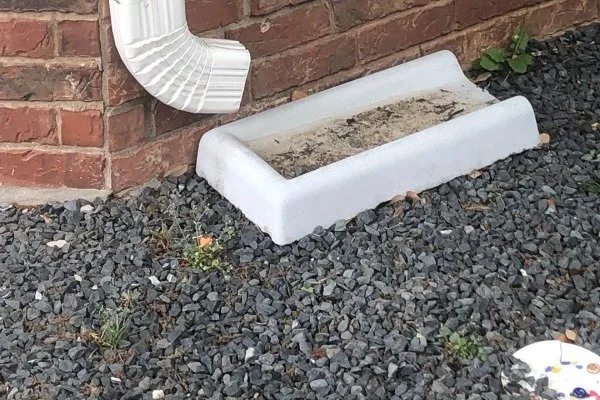
Of all the drainage improvements available to DFW homeowners, few deliver as direct a foundation protection benefit as downspout extensions — and few are as consistently overlooked. Most conversations about gutter systems focus on the gutter channel, the material, the guards, and the cleaning schedule. The question of where the downspout actually discharges that water — and whether that location is protecting or threatening the foundation — gets far less attention than it deserves.
On North Texas expansive clay soil, downspout discharge location is one of the most consequential drainage decisions a homeowner can address. This guide covers everything Fort Worth, Southlake, Keller, Colleyville, Grapevine, Trophy Club, Flower Mound, Highland Village, Lewisville, Weatherford, Aledo, and broader DFW homeowners need to know about downspout extensions — why they matter, what the options are, and how Quinn Gutters designs and installs them.
The Problem: Where Most DFW Downspouts Currently Discharge
Walk the perimeter of any established DFW neighborhood and count how many homes have downspouts that terminate at ground level with a simple elbow, one to two feet from the foundation. The number is striking.
This is the standard installation from decades of builder-grade construction throughout the DFW area — a downspout that collects all the roof's runoff from one section and deposits it directly adjacent to the foundation with every rain event. It meets the minimum functional requirement of getting the water off the roof and out of the gutter channel. It completely fails the foundation protection requirement of getting that water away from the clay soil that responds to moisture by expanding against the slab.
For a standard DFW home during a significant spring storm, each downspout can deliver 200 to 400 gallons of water or more to its discharge location. When that discharge location is 18 inches from the foundation, all of that water delivers directly to the clay soil adjacent to the slab — every storm, every spring season, year after year.
Why Discharge Location Matters So Much on DFW Clay
North Texas expansive clay — the montmorillonite-dominant clay that underlies most of the DFW metroplex — has a specific response to moisture that makes discharge location consequential in ways it isn't on sandier soils:
Slow absorption: Clay absorbs water slowly compared to sandy or loam soil. Water delivered to a clay surface during a heavy DFW spring storm doesn't soak in quickly — it pools, and then it slowly migrates laterally and downward.
Concentrated delivery from downspouts: A downspout isn't just contributing a small fraction of the rainfall to the area around the foundation — it's concentrating the entire rainfall collected from a section of roof into a single discharge point. A 30-foot gutter run collecting water from a 1,500-square-foot roof section can deliver thousands of gallons to a single downspout outlet during a major storm.
Moisture cycling drives movement: The expansion when wet and contraction when dry that expansive clay undergoes is directly proportional to the magnitude of moisture change the soil experiences. Consistent concentrated delivery of large water volumes to the foundation zone — followed by the drying that DFW summers produce — creates large moisture swings that drive large soil movement that causes large foundation stress.
Getting downspout discharge away from the foundation reduces the concentration of moisture delivery to the foundation zone, reduces the magnitude of moisture swings in the adjacent clay, and reduces the foundation movement that follows.
Surface Extensions: The Simple Solution
The simplest downspout extension solution is a surface extension — a section of flexible corrugated plastic or rigid pipe that connects to the existing downspout elbow and directs water horizontally away from the foundation before it reaches the ground.
Surface extensions are inexpensive ($10 to $50 for the extension itself), quick to install, and immediately improve discharge distance. A 4-foot or 6-foot surface extension moves the discharge from the current 18 inches to 5 to 7 feet from the foundation — a meaningful improvement in most situations.
Limitations of surface extensions:
They're visible and can be aesthetically disruptive. They can be displaced by lawn mowers, foot traffic, or storm events. Without being staked into the ground, flexible extensions tend to curl back toward the foundation or collapse flat, eventually losing their directional effectiveness. They require periodic inspection to confirm they're still positioned correctly.
Surface extensions are the right first step for homeowners looking to improve discharge distance with minimal cost and complexity. They're less appropriate for homeowners who want a permanent, invisible, and reliable solution — for which underground extensions are the better answer.
Underground Extensions: The Permanent Solution
Underground downspout extensions carry water from the downspout outlet through buried pipe to a discharge point at appropriate distance from the foundation — typically 10 to 15 feet or more. The water moves underground, the landscape above is undisturbed, and the discharge happens at a point far enough from the foundation to prevent clay soil saturation in the foundation zone.
How underground extensions work:
At the ground level below each downspout, a solid (non-perforated) drain pipe connects to the downspout outlet through a fitting adapter. The pipe is laid at a consistent slope toward the discharge point — typically 1% grade or more for reliable gravity flow. At the discharge end, a pop-up emitter is installed flush with the ground surface. The emitter opens under water pressure during rain events, releasing water at the discharge location, and closes when dry to prevent debris backflow and pest entry.
Key design decisions:
Pipe size: 4-inch solid PVC or corrugated pipe is the standard residential choice. 4-inch pipe has sufficient capacity to handle the flow from a single downspout, even during DFW's peak spring storm intensities.
Discharge location: The discharge point should be on permeable soil that can absorb the water volume, at appropriate grade to allow drainage away from the structure. Options include lawn areas, landscape beds with adequate infiltration, or connection into a storm drainage system where lot access permits.
Integration with other downspouts: For homes where multiple downspouts need to be extended, connecting several extensions into a single main drain line reduces the number of separate discharge points and simplifies the overall drainage layout.
Underground Extensions and French Drain Integration
For properties where underground downspout extensions are being installed alongside French drain systems, integrating both into a single drainage network is the most efficient design approach.
In an integrated system, downspout extensions contribute roof water to the drainage network alongside French drain perforated pipe collecting subsurface groundwater. Both discharge through a common main line to a single appropriate outlet. This design reduces the surface footprint of drainage infrastructure while providing the most complete water management from the full range of moisture sources affecting the foundation zone.
Quinn Gutters designs integrated gutter and drainage systems for DFW homeowners who need comprehensive water management — combining downspout extensions, French drains, catch basins, and appropriate discharge infrastructure into a single coordinated system.
Installation Considerations for DFW Properties
Soil conditions: DFW clay soil requires careful attention during excavation. Trenching through clay is more work than through sandy soil — the clay compacts against the pipe walls and must be adequately backfilled to prevent ground settling over the pipe that can affect above-grade drainage patterns.
Root conflicts: Mature tree roots — particularly from live oaks, pecans, and other established species throughout DFW neighborhoods — can conflict with underground pipe routing. Quinn Gutters assesses root system locations during the drainage design phase to route pipe in paths that minimize root disturbance and minimize the risk of future root intrusion into the drainage line.
Landscape disruption: Installing underground extensions requires trenching through established landscaping. Quinn Gutters minimizes disruption by planning efficient routes, using appropriate-width trenching equipment, and restoring the surface above the pipe run after installation.
Discharge point location relative to property boundaries: Discharge points need to be positioned within the property boundary and in locations where the discharged water won't affect neighboring properties. In tight urban lots, this requires careful planning. Quinn Gutters designs discharge locations that address all these constraints during the assessment phase.
Costs for DFW Downspout Extension Projects
Surface extensions: $50 to $150 per downspout for professional installation of surface extensions including the extension hardware and appropriate securing.
Underground extensions: $200 to $600 per downspout for underground installation including pipe, fittings, discharge adapter, pop-up emitter, trench, and surface restoration. Longer runs to reach adequate discharge distance increase cost accordingly.
Multi-downspout integrated systems: For homes extending multiple downspouts with a common main drain line, the per-downspout cost typically decreases as the shared main line distributes the fixed costs across more outlets.
Quinn Gutters: Downspout Extension Installation Across DFW
Quinn Gutters installs surface and underground downspout extensions, integrated drainage systems, catch basins, and French drains for homeowners throughout Fort Worth, Southlake, Keller, Colleyville, Grapevine, Trophy Club, Flower Mound, Highland Village, Lewisville, Northlake, Argyle, Weatherford, Aledo, and surrounding DFW communities.
Every extension project starts with an honest assessment of where the current discharge situation stands, what the foundation zone conditions indicate, and what the most cost-effective extension approach is for the specific property — not a generic solution applied to every situation.

Get Your Downspout Discharge Right for Your DFW Foundation
Request your free downspout extension assessment from Quinn Gutters today and let our team design the discharge solution your North Texas foundation actually needs.


