
our Blog
The Right Way to Handle a Sagging Gutter in North Texas — Before It Gets Worse
The Right Way to Handle a Sagging Gutter in North Texas — Before It Gets Worse
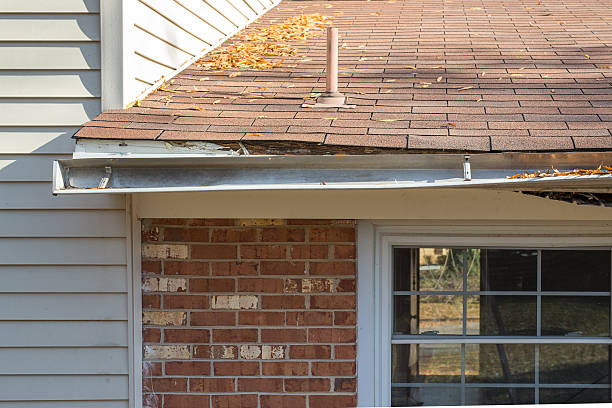
Sagging gutters are one of the most visible gutter failures a DFW homeowner encounters — and because they're visible from the ground, they tend to get noticed before more subtle failures like joint leaks or pitch problems. The problem is that being noticed and being addressed are two different things. In many DFW neighborhoods, it's common to see gutters that have been sagging for a season or more — visible to anyone who looks at the roofline, but not yet dramatic enough to trigger action.
By the time a sagging gutter is prompting a call to a gutter company, the process that caused it has usually been active for long enough to create secondary consequences beyond the sag itself. Understanding what causes sagging, what it's doing to your home while it's unaddressed, and what the right repair approach looks like gives homeowners throughout Fort Worth, Southlake, Keller, Colleyville, Grapevine, Trophy Club, Flower Mound, Highland Village, Lewisville, Frisco, Richardson, Plano, Allen, McKinney, and the broader DFW area the information to act at the right time with the right solution.
What Actually Causes Gutters to Sag in DFW
Sagging in a gutter run doesn't happen randomly — it has specific mechanical causes that the appearance of the sag can help diagnose:
Hanger failure from thermal cycling:
This is the most common cause of sagging in DFW's established housing stock. The hidden hangers (or in older systems, gutter spikes) securing the gutter to the fascia experience the full range of North Texas's thermal cycling — the 80-plus degree annual temperature swing that causes the aluminum gutter material to expand and contract repeatedly. For gutter spikes specifically, each expansion-contraction cycle works the nail slightly looser in the fascia wood. After 8 to 15 years of this process, the spike has pulled far enough from the fascia that it no longer supports the gutter's weight under water load — and the section between the failing spike and its neighbors begins to sag.
For systems with hidden hangers and screws, thermal cycling produces less hardware fatigue — screws maintain their grip significantly better than spikes through repeated cycling — but inadequate spacing (hangers spaced too far apart) allows the gutter to deflect between support points under water load, which eventually produces a visible sag between hangers that were never close enough together.
Fascia deterioration as the mounting surface:
When the fascia board behind the gutters has absorbed enough moisture from chronic overflow or joint leaks to begin softening, the hardware loses its holding capacity even when the hardware itself is intact. A screw driven into sound fascia holds firmly for decades. The same screw in softened, partially rotted fascia begins pulling through the wood fibers within one to two seasons of rain load. The gutter hangs on progressively less secure mounting until it sags.
This cause is particularly common in DFW neighborhoods where older sectional gutter systems have been through enough joint failures over the years to have delivered chronic moisture to the fascia behind them. The sagging gutter is the visible symptom of a fascia problem that developed over seasons of unaddressed joint leaks.
Weight accumulation from debris and standing water:
Gutters that carry significant debris loads between cleaning visits are gutters that carry more weight than they were designed for. A packed debris load in a 30-foot run — wet leaves, pecan husks, compacted organic matter — can add 50 to 80 pounds to what is meant to be a water-only drainage system. That weight, combined with water load during rain events, exceeds the design load of normally spaced hangers and accelerates the hardware fatigue that produces sagging.
This cause is directly addressed through appropriate cleaning frequency — which is why Quinn Gutters' cleaning schedule recommendations for North Texas's debris-heavy properties account for the specific debris loads from live oak, pecan, and Bradford pear coverage rather than applying a generic once-or-twice-annual template.
Ice loading from winter events:
DFW's periodic ice events add the weight of ice formation in the gutter channel to the normal load — often dramatically, since ice is significantly heavier than water per unit volume. Hardware that was marginally adequate before a significant ice event may complete its failure during or after freezing. Gutters that sag or separate from the fascia after winter weather are common in DFW neighborhoods following significant ice accumulation.
What a Sagging Section Is Doing While It Waits for Repair
The urgency of addressing sagging gutters is partly about the aesthetic — a sagging run is visible from the street and affects curb appeal. But the more consequential argument is what the sagging section is doing to the home's structure while it waits for repair:
Creating a water collection point: A sag in a gutter run creates a low point that collects water rather than draining it toward the downspout. Water that should be flowing to the outlet is instead pooling in the low point of the sag. This standing water adds weight that increases the mechanical stress on the already-failing hardware. It also maintains continuous moisture contact with the fascia at the sag location — the lowest point in the run where water sits longest.
Producing overflow at the sag location: When the sag deepens enough, the low point actually sits below the gutter's front lip — meaning water fills to the gutter's capacity at the sag before overflowing forward, rather than flowing to the downspout. This overflow at the sag location delivers water directly to the exterior wall and foundation zone at that specific point with every rain event.
Accelerating the adjacent hardware: As the sagging section's hardware fails progressively, the load it was carrying transfers to the adjacent hangers. A section that starts as a single failing hanger becomes a multi-hanger failure zone as the mechanical stress of the unsupported weight is redistributed to neighbors that weren't designed to carry double load.
The Correct Repair Approach for Sagging Gutters
The right repair for a sagging gutter depends on identifying the root cause — because addressing only the visible sag without addressing what caused it produces a repair that fails again quickly:
If the cause is hanger fatigue on an otherwise sound fascia:
The repair is rehinging — removing the gutter section from the failing hardware, assessing the fascia condition (confirming it's still sound enough to hold new hardware), and installing new hidden hangers with screws at the correct spacing (18 to 24 inches). This repair on a seamless system with sound fascia typically restores the section to full service life.
For systems with gutter spikes throughout (indicating an older, lower-quality original installation), Quinn Gutters often recommends converting the full run to hidden hangers with screws rather than spot-replacing individual spikes — because if one spike has failed from thermal cycling, the adjacent spikes have experienced the same number of cycles and are at comparable risk.
If the cause is fascia deterioration:
Rehinging a sagging gutter onto deteriorated fascia produces a repair that fails within months — the new hardware has the same problem as the old hardware. The correct sequence is fascia repair or replacement first, followed by gutter reinstallation onto sound mounting. When the sagging section has fascia issues along its full length, this typically means a combined fascia-and-gutter project rather than a simple rehang.
If the cause is chronic debris weight:
Rehanging the sagging section addresses the visible failure but doesn't prevent recurrence if the debris accumulation that caused the weight loading continues. Quinn Gutters addresses this by rehanging the section and simultaneously recommending either a cleaning schedule adjustment appropriate to the property's debris load or gutter guard installation that prevents the accumulation that drives the weight loading.
When Sagging Argues for Replacement Rather Than Repair
Some sagging situations argue for seamless replacement rather than section-by-section repair. Quinn Gutters applies the standard assessment criteria:
Multiple sagging sections distributed throughout the system indicate widespread hardware failure — typically in an older gutter system whose hardware has reached end-of-life simultaneously across the runs. Rehanging each section individually produces multiple repair visits over a short period without addressing the system's overall age and condition.
Sagging combined with multiple active joint failures — a system that is both sagging and leaking at several joints has two widespread failure modes active simultaneously. The combined repair cost often approaches or exceeds seamless replacement cost, which provides 20-plus years of service life rather than extending the life of an aging system by a few years.
System age over 20 years with widespread visible aging — at this age in DFW's demanding climate, a comprehensive assessment almost always reveals that replacement is more economical than comprehensive repair across a system that will continue developing new failures.
Quinn Gutters assesses every sagging situation within this framework — giving DFW homeowners honest guidance about whether a targeted repair is the right answer or whether the broader system condition argues for something more comprehensive.
Quinn Gutters: Gutter Repair and Replacement Across DFW
Quinn Gutters handles sagging gutter repair, rehinging, fascia assessment, and seamless replacement for homeowners throughout Fort Worth, Southlake, Keller, Colleyville, Grapevine, Trophy Club, Flower Mound, Highland Village, Lewisville, Frisco, Richardson, Plano, Allen, McKinney, and every community in the DFW service area.
Every sagging situation gets an honest assessment of root cause and an honest recommendation — repair when repair is right, replacement when the system's overall condition argues for it, and clear explanation of the reasoning either way.

Don't Wait for a Sagging Section to Complete Its Failure
Request your free gutter repair assessment from Quinn Gutters today and find out what's causing your DFW sagging gutter — and what the right fix actually is.


