
our Blog
Understanding Gutter Sealants: What DFW Homeowners Need to Know
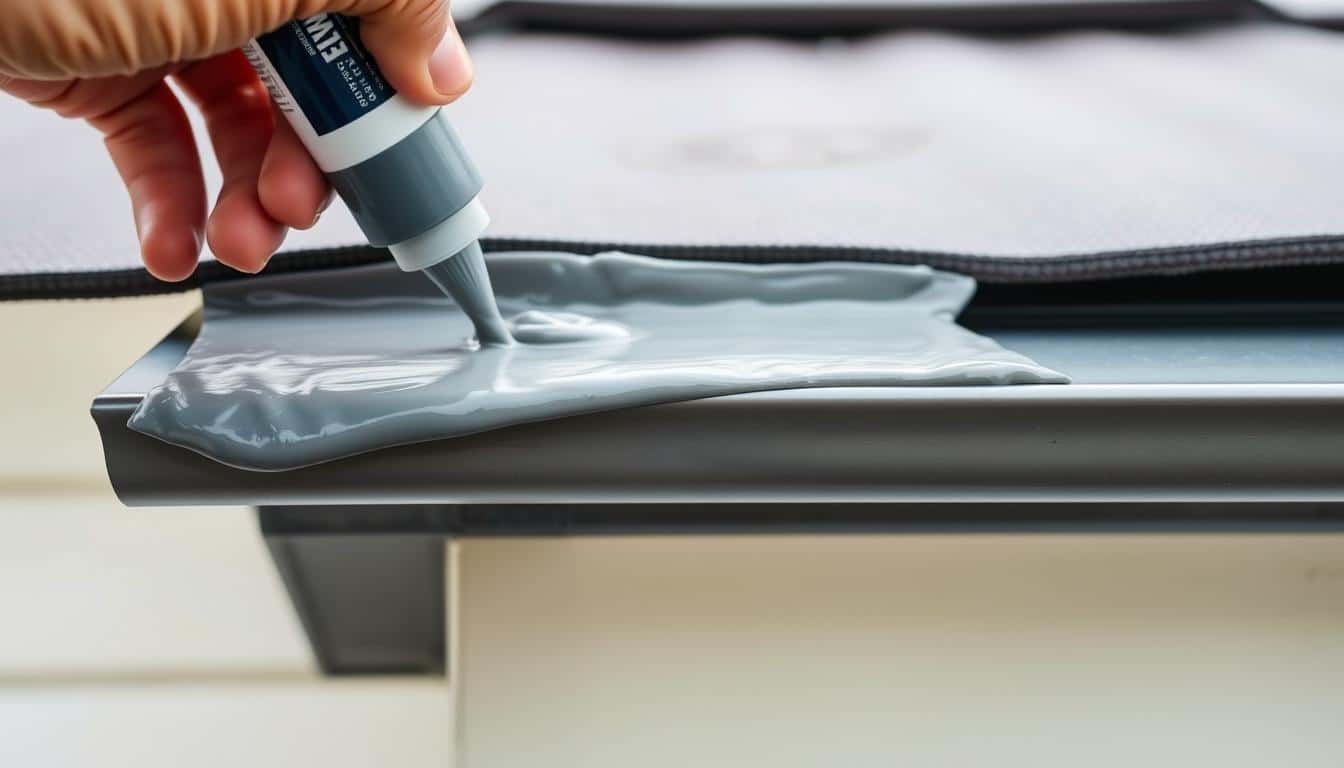
Gutter sealant is the unsexy hero of drainage performance — the material at every corner connection and downspout outlet that prevents water from escaping through the joints that are necessary in any gutter system, even seamless ones. It works invisibly when functioning correctly and reveals its importance only when it fails — typically as a stain on the exterior wall, a drip during rain events, or the beginning of fascia deterioration that follows when water contacts wood repeatedly.
For homeowners throughout Fort Worth, Southlake, Keller, Colleyville, Grapevine, Trophy Club, Flower Mound, Highland Village, Lewisville, Northlake, Argyle, Weatherford, Aledo, and the broader DFW area, understanding how gutter sealant works, why it fails faster in North Texas than in milder climates, and what to do about it is practical knowledge that prevents the compounding damage that sealant failure produces.
What Gutter Sealant Does
In any gutter system — sectional or seamless — there are points where two pieces of aluminum meet and require a watertight seal:
In seamless gutter systems: Corner connections where two gutter runs meet at the home's corners, and downspout outlet fittings where the downspout connects to the gutter channel.
In sectional gutter systems: All of the above, plus the connections between every 10-foot section throughout each run.
At each of these connection points, the aluminum pieces are fitted together physically — mitered at corners, overlapped at sectional joints, fitted at outlets. The physical fit alone is not watertight. Gutter sealant — applied to the interior surfaces of each connection — fills the gap between the metal pieces and creates the continuous watertight barrier that keeps water flowing to the downspout rather than escaping through the connection.
When sealant is in good condition, it's invisible from the inside and outside of the gutter system. When it fails, water finds the gap it was sealing and begins escaping — typically producing a drip during rain events and eventually producing the exterior wall staining and fascia contact moisture that follow.
Why DFW's Climate Fails Gutter Sealant Faster Than Most
Gutter sealant has a specific vulnerability to the conditions that DFW produces more intensely than most US markets: thermal cycling and UV exposure.
Thermal cycling:The expansion and contraction of aluminum with temperature change creates mechanical stress on the sealant at every connection point. As the aluminum expands during DFW's summer heat and contracts during winter cold, the metal surfaces that the sealant bonds move relative to each other — stretching, compressing, and eventually fatiguing the sealant polymer.
DFW's 80-plus degree annual temperature range (winter lows that occasionally dip below freezing, summer highs regularly exceeding 100 degrees) creates more severe thermal cycling than most US metro areas. This more severe cycling produces sealant fatigue faster than national recommendations for sealant maintenance frequency reflect.
UV exposure:North Texas's intense summer UV — among the highest UV index levels in the continental US — degrades the polymer structure of gutter sealants faster than in cloudier, higher-latitude climates. UV exposure causes the sealant to dry, crack, and lose adhesion over time. Quality sealants are formulated to resist UV degradation — but even quality products age faster under DFW's UV conditions than manufacturer testing in milder climates might indicate.
The combined effect of DFW's thermal cycling and UV exposure is that gutter sealants at corner connections and outlet fittings may need attention within 5 to 10 years of installation in a seamless system — and within 3 to 7 years in a sectional system where there are significantly more sealed connections to age simultaneously.
How to Identify Sealant Failure
From the ground:During a rain event, watch the gutter corners and downspout locations on visible elevations. Any dripping at these locations that doesn't come from the downspout outlet itself indicates sealant failure at that connection. Between rain events, look for mineral staining or discoloration on the exterior wall immediately below corner locations — this staining pattern indicates water has been dripping at that corner through multiple rain events.
From a ladder during inspection:On the inside surface of corner connections, look at the sealant bead directly. Healthy sealant is flexible and adheres completely to both metal surfaces — pressing it gently should reveal elasticity and firm adhesion. Failed sealant is dry, cracked, brittle, or partially pulled away from one or both metal surfaces. Any visible gap in the sealant line is a leak point that will produce water escape during the next significant rain event.
At outlet fittings where downspouts connect to the channel, the sealant around the perimeter of the outlet opening is the most important single sealant location in a seamless system. Check this connection specifically during every ladder inspection.
Types of Gutter Sealant and What Quinn Gutters Uses
Not all gutter sealants perform equally in DFW conditions. The key properties for North Texas sealant selection are:
Flexibility through temperature range: The sealant must maintain flexibility through the full DFW temperature cycle — remaining elastic at below-freezing temperatures and not flowing or losing adhesion at temperatures above 100 degrees. Silicone-based sealants and quality polyurethane formulations generally meet this requirement.
UV resistance: Sealant that degrades rapidly under UV exposure fails faster in DFW's intense summer conditions. UV-stable formulations extend service life significantly.
Adhesion to aluminum: Some sealant formulations have stronger aluminum adhesion than others. Strong adhesion to both metal surfaces is what maintains the watertight seal through thermal cycling — sealant that doesn't adhere firmly will peel away from one surface as the metal moves.
Paintability or color matching: In some situations, sealant at corners needs to match the gutter color for aesthetic purposes. Color-matched or paintable formulations address this need.
Quinn Gutters uses quality gutter sealants appropriate for DFW's specific climate conditions — not the cheapest available product, but formulations that perform through North Texas's thermal cycling and UV environment with appropriate service life.
Resealing: What the Process Looks Like
When corner or outlet sealant fails on a DFW gutter system, resealing is the correct repair — provided the underlying metal is in sound condition and the connection geometry is intact.
Proper resealing process:
Preparation: The failed sealant must be removed completely before new sealant is applied. Applying new sealant over failed, cracked sealant doesn't restore the watertight seal — it adds a surface layer that may look better briefly but doesn't actually bond to the metal surfaces properly. All old sealant must be scraped away, the metal cleaned with appropriate cleaner, and the surface dried thoroughly before new sealant is applied.
Application: New sealant is applied to the interior surfaces of the connection — both metal faces — in a consistent bead that covers the full contact area. The two metal pieces are brought together firmly and any squeeze-out at the edges of the joint confirms that coverage is complete.
Cure time: Quality sealants need appropriate cure time before being exposed to water. Resealing immediately before rain events doesn't allow the sealant to cure properly — scheduling repairs during dry weather periods with adequate cure time before the next rain provides the best long-term adhesion.
Sealant Maintenance as Part of Proactive Gutter Management
For DFW homeowners following a proactive gutter management approach, annual inspection specifically looking at corner and outlet sealant condition is the maintenance practice that catches sealant failures before they produce the visible consequences of water contact with fascia and exterior walls.
Quinn Gutters' professional cleaning visits include this sealant inspection as part of the system assessment — flagging any connections showing early sealant failure for timely resealing before the next storm season tests them.
Quinn Gutters: Quality Sealant Work Across DFW
Quinn Gutters addresses sealant maintenance and repair for homeowners throughout Fort Worth, Southlake, Keller, Colleyville, Grapevine, Trophy Club, Flower Mound, Highland Village, Lewisville, Northlake, Argyle, Weatherford, Aledo, and surrounding DFW communities — using quality sealant products appropriate for North Texas conditions and following proper preparation and application practices that produce durable, watertight results.

Address Your DFW Gutter Sealant Before the Next Storm
Request your free gutter inspection from Quinn Gutters today and let our team assess your corner and outlet sealant condition before the next North Texas storm tests it.


