
our Blog
Why the First Storm After Gutter Installation Is the Most Important Test
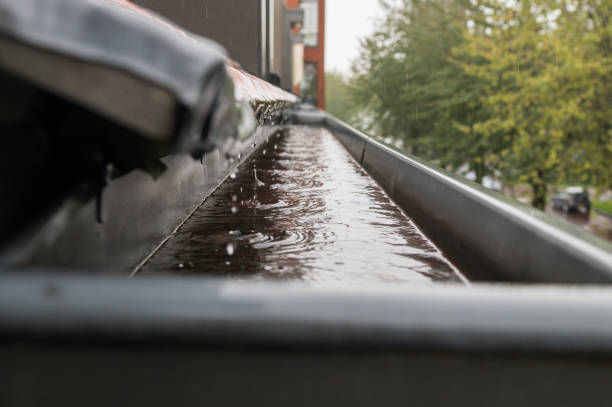
Why the First Storm After Gutter Installation Is the Most Important Test
A new seamless gutter system looks correct from the ground on installation day. The gutters are straight, the hangers are secure, the downspouts are in place. Everything visible from eye level appears exactly as it should. But the true performance test of any DFW gutter installation isn't what it looks like on a dry day — it's how water behaves through the system during the first significant rain event that follows.
For homeowners throughout Fort Worth, Southlake, Keller, Colleyville, Grapevine, Trophy Club, Flower Mound, Highland Village, Lewisville, Frisco, Richardson, Plano, Allen, McKinney, and the full DFW area who have recently received a new gutter installation or are planning one, this guide covers exactly what to observe during the first storm — what good performance looks like, what potential issues reveal themselves under actual water load, and what to do if you see something unexpected.
Why the First Storm Reveals What a Dry Day Can't
A gutter installation that passes all the right installation-day tests — flush test completed, pitch confirmed, joints sealed, hardware secure — can still reveal performance nuances under the conditions of an actual storm that the installation-day flush test doesn't fully replicate.
Volume and velocity are different in real storms: A garden hose flowing into one end of a gutter run introduces water at a moderate, steady rate. A DFW spring storm delivering 1.5 inches per hour introduces water across the entire roof surface simultaneously — concentrated at valleys and roofline low points, arriving in the gutter channel from every point along its length rather than from one end. This simultaneous full-surface delivery creates conditions that reveal any undersizing, pitch inconsistency, or downspout capacity limitation that the installation-day test didn't fully stress.
Wind-driven rain interacts differently with the system: Storm conditions with directional wind create rain that arrives at an angle to the roof surface and may produce runoff patterns at the roofline edge that differ from calm-weather testing. Fascia contact, drip edge behavior, and water entry angle all change slightly in wind-driven conditions — sometimes revealing installation-edge behavior that installation-day testing doesn't replicate.
Actual debris conditions affect storm performance: A system that drains perfectly when installed immediately follows cleaning now has whatever debris the property produces between installation and the first storm. For a Flower Mound home with Bradford pears, the first spring storm after an October installation has the system managing winter debris accumulation alongside the rain event. While this doesn't change the system's fundamental performance, it's worth observing whether debris levels are creating any flow restriction that the installation-day flush test on a clean system didn't reveal.
What Good First-Storm Performance Looks Like
During the first significant rain event after your Quinn Gutters installation, here's what correct system behavior looks like from ground-level observation:
All downspouts are actively discharging throughout the storm. Every downspout on the property should be visibly flowing during any significant rain event. Walk the perimeter during or immediately after a heavy rain and confirm that each outlet is producing flow proportional to the rainfall intensity. A downspout that's dry or producing minimal flow while adjacent ones are actively discharging has either a blockage or a pitch problem directing water away from it.
No water overflowing any gutter section. During moderate to heavy rain, water should flow through the channels to the downspouts without overflowing at any point along the runs. Any overflow indicates either a capacity problem (system undersized for the drainage area), a pitch problem (section not draining toward the downspout), or a blockage (debris or closed downspout backing up the run). None of these should be present on a properly installed new system.
Water discharging cleanly at each outlet. At each downspout discharge point, water should be flowing away from the foundation toward the intended discharge direction. Any discharge that appears to be flowing toward the foundation indicates either a discharge location concern or a surface topography issue at the outlet that directs flow back toward the structure.
No dripping at corner connections or downspout outlets. On a properly sealed seamless system, the only potential leak locations are at corners and outlets — the only seam points in the system. Any dripping at these locations during the first storm indicates a sealant quality or application issue that should be addressed promptly.
Gutters appear stable under water load. The channels should maintain their position and pitch under the weight of water and any debris that accumulated since installation. Any visible sagging that appears under water load but wasn't visible on the dry installation-day inspection indicates hanger spacing may need adjustment at the sagging location.
What Potential Issues Look Like and What They Mean
Section overflow during moderate rain when the channel isn't visibly clogged:
This pattern on a new installation indicates either a pitch problem at the overflowing section (water backs up because it can't drain toward the downspout) or a downspout capacity issue (water arrives at the downspout faster than it can exit). Pitch problems on new installations are typically addressable by adjusting the hanger positions in the affected section — a minor correction that Quinn Gutters addresses promptly under workmanship warranty.
One downspout not flowing while others are active:
A downspout that wasn't flowing at all during the first storm likely has a blockage that formed between installation and the first rain, or has a connection issue at the outlet fitting that needs to be reseated. Quinn Gutters addresses this immediately as a warranty concern.
Dripping at a corner during rain:
New corner connections may occasionally produce minor dripping during the first storm if the sealant didn't achieve full cure before rain contacted it, or if the sealant application missed complete coverage at one point of the miter. This is the type of issue Quinn Gutters' final flush test on installation day is designed to catch — but if it appears during the first storm, it's a workmanship warranty item addressed promptly.
Water flowing over the front edge of the gutter rather than through the downspout:
This pattern during heavy rain indicates either the downspout is effectively blocked or the gutter capacity is insufficient for the roof area feeding it. On a new installation sized correctly, this should only occur during the most extreme rainfall intensities — not during standard DFW spring rain events. If it appears regularly, capacity assessment is warranted.
The Quinn Gutters Workmanship Warranty and First-Storm Issues
Quinn Gutters stands behind every installation with written workmanship warranty coverage. Any performance issue that appears during the first storm season — dripping corners, pitch problems, hardware that's begun to loosen — is addressed under workmanship warranty at no additional charge.
This warranty commitment is possible because Quinn Gutters installs to the standards that produce correct first-storm performance: proper pitch setting throughout, hidden hangers with screws at 18-to-24-inch spacing, quality sealant at all connections, final flush test before leaving. When these standards are met, first-storm surprises are rare. When they do occur, the workmanship warranty provides the recourse that makes the installation commitment meaningful.
How to report a first-storm issue: Contact Quinn Gutters promptly after observing any unexpected behavior during the first storm — with photographs documenting the specific location and behavior if possible. Photographs taken during the rain event or immediately after, showing overflow at a specific section or dripping at a specific corner, provide the most useful diagnostic information.
Watching the First Storm: A Practical Approach
For most DFW homeowners, the first storm observation is a 10-minute exercise that either confirms everything is working correctly or identifies a specific item for follow-up.
Before the storm: Note the approximate rainfall intensity as reported by weather services — this provides context for how demanding the test conditions were.
During the storm (safely from inside or under cover): Walk to windows with views of multiple gutter elevations and observe overflow behavior. Note any sections that appear to be overflowing.
Immediately after the storm: Walk the perimeter and observe downspout discharge activity (still flowing or recently stopped), any standing water patterns below gutter sections, and the condition of the discharge zones at each outlet.
Note any observations and contact Quinn Gutters within a day or two if anything unexpected was observed. In most cases, the first storm on a properly installed Quinn Gutters system produces exactly the performance the installation was designed to deliver.
Quinn Gutters: Standing Behind Every Installation Across DFW
Quinn Gutters installs seamless gutter systems throughout the full DFW service area with the workmanship quality that makes first-storm performance what it should be — and the workmanship warranty that stands behind it when the rare issue does appear.

Get a System That Passes the First Storm Test
Request your free installation quote from Quinn Gutters today and get a North Texas gutter installation backed by the workmanship warranty that protects your investment from day one.


