
our Blog
Why Undersized Gutters Are Slowly Damaging Your DFW Home
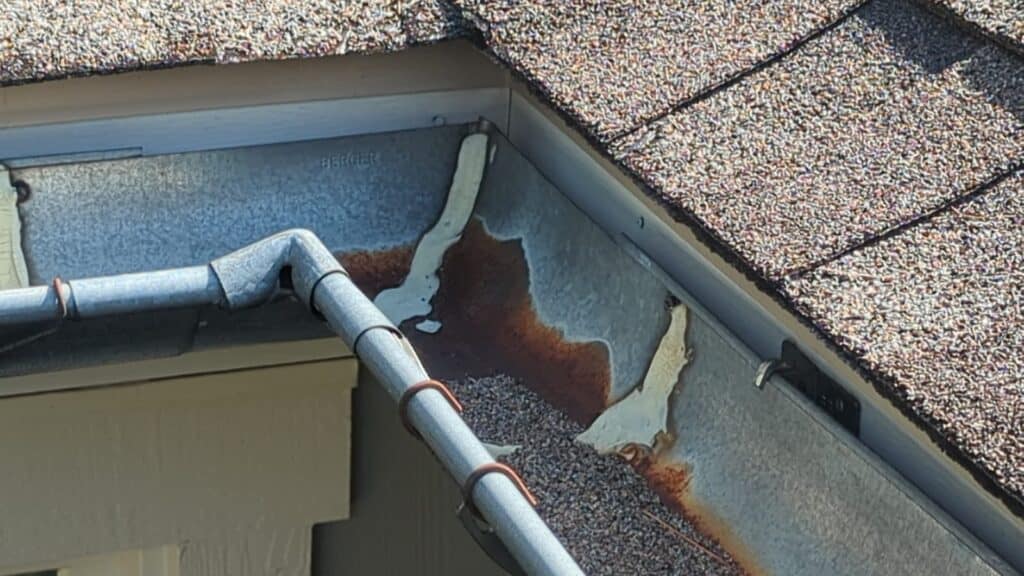
One of the most common gutter problems in the DFW area isn't a failed joint, a clogged downspout, or a sagging hanger — it's a system that was never sized correctly for the home it was installed on. Undersized gutters look perfectly fine. They're attached to the fascia, the aluminum is intact, and the downspouts are in place. But during a significant North Texas spring storm, they overflow — consistently, predictably, and with every rain event that pushes past their capacity threshold.
For homeowners throughout Fort Worth, Southlake, Keller, Colleyville, Grapevine, Trophy Club, Watauga, Hurst, Euless, Bedford, Haltom City, Benbrook, Azle, Mansfield, Burleson, and the broader DFW metroplex, understanding why gutter sizing matters — and what undersized gutters are actually doing to their homes — is one of the most useful pieces of drainage knowledge available.
How Gutter Sizing Works
Gutters are sized based on the volume of water they can carry per unit of time. The two standard residential gutter sizes in DFW are 5-inch and 6-inch K-style — and the difference between them is more significant than it sounds.
A 5-inch K-style gutter has a cross-sectional capacity of approximately 1.2 gallons per foot per minute at normal flow. A 6-inch K-style gutter handles approximately 1.7 gallons per foot per minute — roughly 40 percent more volume at the same flow rate.
Whether that capacity difference matters on your specific home depends on how much roof surface is feeding each gutter run, the pitch of your roof, and how fast water arrives during the most intense rain events your area experiences. In the DFW area, the intensity question is particularly important — spring storms regularly deliver peak rainfall rates of two to four inches per hour, and the instantaneous flow rate from a steep-pitched roof section during those events is substantially higher than average annual rainfall calculations suggest.
The practical reality: a 5-inch gutter system installed on a standard-sized DFW home with a typical roofline pitch handles normal rainfall loads effectively. The same 5-inch system on a larger home with a steeper pitch, longer runs, or complex roofline valleys that concentrate runoff from multiple planes can overflow during any significant spring storm — not because it's clogged or failing, but simply because it was never sized to handle the actual drainage load.
Why Undersized Gutters Are Common in DFW
Builder-grade default sizing:The most common source of undersized gutters in the DFW area is builder-grade construction where 5-inch gutters were specified as a default — applied to every home in a development regardless of individual roofline characteristics. For standard homes with moderate rooflines, this works. For larger homes or those with steeper pitches that generate higher runoff volumes, the default sizing is inadequate from day one.
Previous generation installations:Homes built in the 1970s and 1980s were often guttered with 4-inch systems — a size that's almost universally inadequate for modern DFW residential rooflines. Many of these homes have been re-guttered over the decades, but some still carry systems that were sized for an earlier era's standard.
Additions and renovations that increased roof area:When additions, expanded second stories, or new roof sections are added to a home, the drainage area feeding the existing gutters increases — but the gutters themselves often don't change. A system that was adequately sized for the original home may be undersized after a significant addition.
Lack of assessment during installation:Some gutter installations in DFW — particularly from less professional operators — don't include the roofline assessment that sizing decisions require. A company that shows up with one standard size and installs it everywhere without evaluating the specific drainage load of each section is likely to produce inadequate sizing on some homes.
What Undersized Gutters Do to Your DFW Home
The consequences of chronic undersized gutter overflow are the same as other forms of gutter failure — just arriving with more frequency and more predictability than random maintenance failures.
Foundation moisture cycling:Every overflow event during a North Texas spring storm delivers concentrated roof water to the foundation zone. On DFW's expansive clay soil, that repeated concentrated moisture delivery drives the expansion and contraction cycling that causes foundation cracking, settling, and differential movement. A home whose gutters overflow during every moderate spring rain is delivering that foundation stress with every significant storm — continuously through multiple seasons.
Fascia deterioration:Overflow from undersized gutters consistently contacts the fascia board at the gutter's rear edge. The repeated wetting from every overflow event accelerates moisture absorption and wood rot in the fascia — often producing visible damage within two to three years of consistent overflow. Once fascia begins deteriorating, gutter hardware pulls loose and the problem compounds.
Siding and exterior wall damage:Water cascading over the front edge of undersized gutters runs down the exterior wall face with every rain event. On painted siding, this produces the dark vertical staining that indicates repeated water contact. On wood siding, repeated saturation leads to paint failure and eventually to the swelling and splitting that requires material replacement. On brick and masonry, mineral staining from overflow is common in properties where undersized gutters have been overflowing consistently.
Landscaping erosion:The concentrated curtain of overflow from undersized gutters hits the ground at the drip line during every storm — eroding soil, displacing mulch, and damaging foundation plantings. Homeowners who find themselves repeatedly replacing mulch along the foundation perimeter after every storm are often dealing with undersized gutter overflow rather than normal erosion.
Standing water and mosquito habitat:The pooled water around downspout overflow zones and at the foundation line creates standing water conditions that, in Fort Worth's climate, become active mosquito breeding habitat during spring and summer. For homeowners in communities with active West Nile virus monitoring, this creates a public health concern on top of the structural damage risk.
How to Tell If Your DFW Gutters Are Undersized
The clearest indicator of undersized gutters is visible overflow during moderate spring storms when the gutters are not clogged. If water is cascading over the gutter edge during a rain event that isn't particularly intense — not during the heaviest storms of the season, but during ordinary North Texas spring rainfall — your system may be undersized.
Supporting indicators:
Erosion channels below the roofline that don't correspond to downspout discharge points — indicating overflow is occurring along the runs rather than only at downspout outlets.
Staining on the exterior wall in a broad pattern below the gutter line rather than concentrated at joint or corner locations — indicating water is running over the front of the gutter rather than leaking from a specific failure point.
Water pooling at the foundation in a pattern that follows the full roofline drip line rather than specific downspout discharge locations — indicating overflow from the full run rather than concentrated discharge from a single outlet.
A professional assessment that includes actual measurement of your roofline sections and comparison to the capacity of your installed gutter size provides the definitive answer.
The Solution: Right-Sizing During Seamless Replacement
For DFW homeowners dealing with undersized gutters, the most permanent solution is a seamless gutter replacement that specifies the correct size for your home's actual roofline drainage demands.
This means:
A proper on-site assessment of your roofline geometry — measuring the actual drainage area each run serves, evaluating the roof pitch, and identifying any valley concentration points where multiple roof sections funnel water to a single location.
Correct size specification based on that assessment — 5-inch for standard residential situations, 6-inch where the drainage load requires it. For homes where the entire system is consistently overflowing during moderate rain, upsizing to 6-inch throughout the system is often the right call.
Adequate downspout coverage — in some situations where a larger gutter size alone doesn't solve the problem, adding additional downspout outlets reduces the backup pressure that causes overflow at run midpoints.
Correct downspout sizing — 6-inch gutters paired with undersized 2x3-inch downspouts create a new bottleneck. Proper sizing through the full system — gutters and downspouts — is what eliminates overflow completely.
Quinn Gutters assesses every DFW home's specific roofline during the free on-site evaluation and recommends the right sizing for the actual drainage demands of that home — not a default specification applied to every project regardless of the individual situation.
Quinn Gutters: Right-Sized Installations Across DFW
Quinn Gutters installs properly sized seamless gutter systems for homeowners throughout Fort Worth, Southlake, Keller, Colleyville, Grapevine, Trophy Club, Watauga, Hurst, Euless, Bedford, Haltom City, Benbrook, Azle, Mansfield, Burleson, and surrounding North Texas communities. Every installation begins with an honest assessment of what the home actually needs — including sizing that reflects the roofline's specific drainage demands — rather than a default that may be adequate for most homes but inadequate for yours.

Stop the Overflow and Protect Your DFW Foundation
Request your free gutter assessment from Quinn Gutters today and find out if your current system is sized correctly for your North Texas home's drainage demands.


